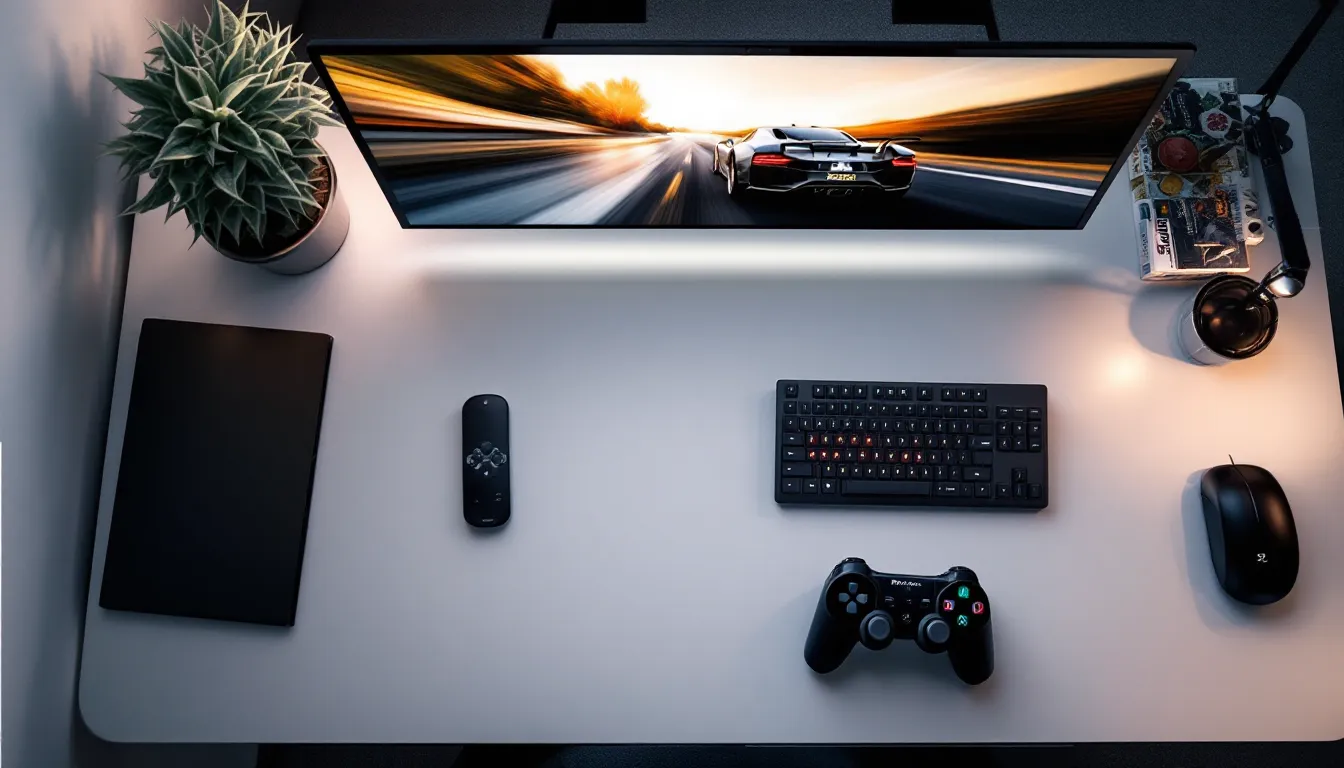
The PS3 might be two console generations behind, but its racing game library remains one of the most diverse and polished in gaming history. From the brutal realism of Gran Turismo to the explosive chaos of Split/Second, Sony’s seventh-gen console delivered racing experiences that still hold up today, and in some cases, haven’t been matched since.
Whether you’re a retro enthusiast hunting for forgotten classics, a sim racing purist looking for an affordable entry point, or just someone who misses the days when arcade racers didn’t nickel-and-dime you with microtransactions, the PS3’s catalog has something worth your time. This guide breaks down the must-play racing games for PS3, covering everything from street racing and off-road mayhem to hardcore simulators and futuristic anti-gravity speedsters. Let’s immerse.
Key Takeaways
- PS3 racing games offer a diverse, polished library with complete single-player campaigns and online multiplayer that still compete with modern titles, available at budget-friendly prices for collectors and retro enthusiasts.
- Iconic PS3 racing franchises like Gran Turismo, Need for Speed, and Burnout Paradise pioneered innovations in sim racing, arcade racing, and open-world design that modern racing games continue to build upon today.
- Hidden gems such as Split/Second and MotorStorm deliver unique mechanics like dynamic track destruction and deformable terrain that haven’t been fully replicated in contemporary racing experiences.
- To maximize your PS3 racing experience in 2026, invest in a compatible racing wheel like the Logitech G25/G27, check disc condition carefully when buying used games, and optimize your display settings for 1080p output.
- The PS3 racing library represents a golden era of game design where developers prioritized gameplay depth and complete content over live-service models, battle passes, and microtransactions.
Why PS3 Racing Games Still Matter in 2026
The PS3 era represents a sweet spot in racing game development, developers had mastered HD graphics, online multiplayer was becoming standard, and the industry hadn’t yet committed fully to live-service models. These games shipped complete, with full single-player campaigns and robust multiplayer modes that didn’t require constant internet connectivity.
For collectors and budget-conscious gamers, PS3 racing games are dirt cheap right now. You can build an entire library for the cost of a single modern AAA title. Plus, many of these games never received proper remasters or ports, making the PS3 versions the only way to experience them.
Beyond nostalgia, there’s genuine mechanical depth here. Gran Turismo 5 shipped with over 1,000 cars, a roster that still dwarfs many modern racers. Burnout Paradise’s open-world design influenced countless games that followed. And the sheer variety across arcade, sim, and combat racing genres gives the PS3 library a breadth that modern platforms struggle to match.
The Golden Era of Racing Game Innovation
The late 2000s and early 2010s saw racing developers taking risks that feel rare today. MotorStorm’s deformable terrain changed racing lines mid-race. Split/Second let players trigger building collapses to alter tracks dynamically. ModNation Racers gave players full creation tools years before Dreams attempted something similar.
This was also the generation where sim racing truly matured on consoles. Gran Turismo 5 introduced dynamic weather and day/night cycles with real-time track temperature changes affecting tire grip. F1 2010 and its sequels brought authentic Formula One racing to living rooms with career modes that spanned entire seasons.
The arcade side wasn’t slouching either. Need for Speed: Hot Pursuit (2010) revitalized the franchise with Criterion’s Autolog social system, which seamlessly integrated friend competition into every race. Burnout Paradise redefined what an open-world racer could be, ditching traditional menus for a fully explorable city where every street corner was a potential race start.
Many of these innovations have been diluted or abandoned in modern racing games, making the PS3 library feel fresh rather than dated. The focus was on gameplay depth and content volume, not battle passes or seasonal content drops.
Top Arcade-Style Racing Games for PS3
Arcade racers prioritize fun over realism, with forgiving physics, power-ups, and spectacle-driven gameplay. The PS3 had an embarrassment of riches in this category.
Need for Speed Series: Hot Pursuit and Most Wanted
Need for Speed: Hot Pursuit (2010) is Criterion Games at their absolute peak. The game strips away the tuning menus and open-world bloat that had weighed down earlier NFS titles, focusing purely on white-knuckle racing through gorgeous Seacrest County. The Autolog system turned every event into a competition against friends’ times, creating addictive “just one more race” loops.
Playing as either racer or cop adds meaningful variety. Racers get EMPs and turbo boosts, while cops deploy spike strips and call in helicopter support. The sense of speed is intoxicating, especially when you’re threading through oncoming traffic at 200+ mph with a roadblock forming ahead.
Need for Speed: Most Wanted (2012) takes the Hot Pursuit formula and drops it into an open-world city inspired by Burnout Paradise. Every car is unlocked from the start, you just drive up and take it, eliminating progression gates that modern racing games love to hide behind. The game tracks your performance across speed cameras, jump distances, and pursuit milestones, constantly feeding you challenges.
Both titles feature extensive car rosters including exotics like the Bugatti Veyron, Lamborghini Aventador, and Porsche 911 GT3 RS (in later editions). The destruction physics aren’t quite Burnout-level, but the takedown mechanics remain supremely satisfying.
MotorStorm Series: Off-Road Chaos at Its Finest
Evolution Studios’ MotorStorm trilogy showcased the PS3’s processing power through deformable terrain and particle effects that still impress. The original MotorStorm (2006) launched with the console, delivering muddy, physics-heavy desert racing where your vehicle choice mattered tactically.
The series peaked with MotorStorm: Pacific Rift (2008), which added lush tropical environments, lava flows, and water hazards. The vehicle classes, from nimble dirt bikes to lumbering big rigs, each had distinct racing lines. Bikes could take shortcuts through narrow gaps, while trucks powered through mud that bogged down lighter vehicles.
MotorStorm: Apocalypse (2011) went full disaster movie, staging races in a city being destroyed by earthquakes in real-time. Buildings collapsed mid-race, creating dynamic track changes. The game launched just after the 2011 Tōhoku earthquake, leading Sony to delay and under-market it, making it an underappreciated gem in the series.
All three games supported 16-player online racing with split-screen options for local multiplayer. The sense of weight and momentum in the vehicle handling remains unmatched in modern off-road racers. Critics at GameSpot praised the series for its technical achievements and brutal difficulty curve.
Burnout Paradise: The Open-World Speed Legend
Criterion’s Burnout Paradise (2008) didn’t just influence racing games, it became the blueprint for open-world racing that games like Forza Horizon would refine years later. Paradise City is a playground designed for speed, with hidden shortcuts, breakable billboards, and super jumps scattered across every district.
Instead of traditional menus, races start by pulling up to any intersection and revving your engine. Want to switch cars? Drive to the junkyard. The seamless integration of exploration and competition creates organic gameplay sessions where you’re constantly discovering new routes.
The Takedown mechanic, slamming opponents into walls at high speed to wreck them, delivers cathartic destruction. The slow-motion crash cams showcase the damage modeling in brutal detail. Burnout Paradise shipped with 75 events and 70+ vehicles, but post-launch support added motorcycles, police cars, and the Big Surf Island expansion.
Even in 2026, Paradise holds up. The remastered version exists on modern platforms, but the PS3 original includes all DLC and runs at a smooth 60fps that makes the speed feel even more intense. For fans of arcade racing that rewards exploration and experimentation over lap times, this is essential.
Best Simulation Racing Games on PS3
Sim racing on PS3 meant obsessive attention to car physics, realistic damage models, and learning curves that rewarded patience. These games catered to players who wanted authentic motorsport experiences.
Gran Turismo 5 and 6: The Definitive Sim Racing Experience
Polyphony Digital’s Gran Turismo 5 (2010) was five years in development and it showed. The game launched with over 1,000 cars spanning automotive history, from 1960s muscle cars to modern hypercars. The premium car models featured detailed interiors with functional dashboards, a level of detail that still impresses.
GT5 introduced dynamic weather and day/night cycles to the series. Racing the Nürburgring Nordschleife as the sun sets and rain starts falling creates tense strategic decisions about tire compounds and pit stop timing. The game’s physics model differentiated between tire types, fuel loads, and track temperatures in ways that casual racers might not notice but enthusiasts obsessed over.
The license tests returned with brutal precision requirements. Gold medals demanded perfect braking points and racing lines, teaching fundamentals that transferred to real-world driving technique. The Special Events included NASCAR, WRC rally stages, and kart racing, adding variety to the Gran Turismo formula.
Gran Turismo 6 (2013) refined GT5’s foundation with improved physics, better AI, and a more accessible progression system. The car list expanded to 1,200 vehicles, including Vision Gran Turismo concept cars designed specifically for the game. The addition of the Goodwood Hill Climb and more rally tracks broadened the racing variety.
Both games supported full racing wheels with force feedback, making them legitimate training tools for aspiring racers. Many professional drivers credit Gran Turismo with teaching them track layouts before ever driving them in real life. Players seeking the most comprehensive racing games for PS3 collection need both GT titles.
F1 Series: Formula One Realism
Codemasters’ F1 series brought official Formula One licensing to PS3 with annual releases from F1 2010 through F1 2013. Each entry featured the complete driver lineup, team liveries, and calendar from that season, including legendary circuits like Monaco, Spa-Francorchamps, and Suzuka.
F1 2010 established the template with a full career mode spanning multiple seasons. You signed with teams, managed R&D upgrades, and navigated press conferences that affected team morale. The handling model struck a balance between accessibility and simulation, challenging enough to require learning each circuit’s braking zones, but not so punishing that casual players bounced off immediately.
F1 2011 added split-screen multiplayer and a co-op championship mode, rare features in modern sim racers. The Safety Car system introduced mid-race drama, bunching up the field after crashes. The KERS and DRS systems from real F1 translated into strategic overtaking tools that required timing and energy management.
F1 2012 featured the Young Driver Test as a tutorial, walking newcomers through racing fundamentals with clear instruction. The Champions Mode let players compete against legendary drivers like Ayrton Senna and Michael Schumacher (in special editions), racing classic cars on historic track configurations.
The damage modeling in later entries affected car performance realistically. Broken front wings reduced downforce, making high-speed corners treacherous. Tire wear and fuel strategy became crucial in longer races, especially when weather changes forced difficult pit decisions. Reviews on Push Square consistently praised the series for balancing authenticity with playability.
Must-Play Kart Racing and Combat Racing Titles
Not every racing game needs realism. The PS3 hosted several excellent kart racers and vehicular combat games that prioritized chaos and creativity.
ModNation Racers: Create Your Own Racing World
United Front Games’ ModNation Racers (2010) was Sony’s ambitious answer to Mario Kart, but with a twist, comprehensive creation tools that let players design custom characters, karts, and entire race tracks. The tagline “Play, Create, Share” perfectly captured the game’s philosophy.
The racing itself is solid kart action with drifting mechanics that fill boost meters and weapon pickups that include lightning strikes, sonic attacks, and shield power-ups. The handling is responsive and the tracks feature multiple paths with shortcuts that reward exploration.
The real hook is the creation suite. The track editor is shockingly deep, with terrain sculpting tools, object placement, and logic gates that enable complex interactive elements. Players shared creations online, building a library of community tracks that ranged from faithful recreations of real circuits to wild fantasy designs. Some tracks incorporated minigames and puzzle elements beyond simple racing.
Character customization rivals some modern RPGs. You can sculpt facial features, design custom decals, and create themed karts with modular parts. The style is charming rather than edgy, with a clean aesthetic that’s aged well.
ModNation Racers never achieved Mario Kart’s cultural dominance, partly due to load times that could stretch past 40 seconds on PS3. But for players who wanted creative freedom alongside their kart racing, it delivered something unique that hasn’t been replicated since.
Twisted Metal: Vehicular Combat Mayhem
David Jaffe’s Twisted Metal (2012) revived Sony’s cult-classic vehicular combat series for PS3. This isn’t racing in the traditional sense, it’s demolition derby combat with rocket launchers, flamethrowers, and special abilities unique to each driver’s vehicle.
The campaign follows three storylines across post-apocalyptic environments including Los Angeles landmarks, industrial complexes, and demolition arenas. Each character has a signature vehicle with unique special weapons. Sweet Tooth’s ice cream truck, for example, can transform into a murderous mech with devastating firepower.
The combat mechanics reward skillful dodging and strategic weapon use. Vehicles can fire forward-facing guns, rear missiles, and special attacks charged by dealing damage. The physics-based destruction lets you knock opponents off elevated platforms or into environmental hazards like lava pits.
Multiplayer supported up to 16 players online with team-based modes including Nuke, a mode where teams capture opponents, transport them to a missile launcher, and sacrifice them to fire city-destroying weapons. The mode’s complexity and coordination requirements made it intensely competitive.
While not strictly a racing game, Twisted Metal belongs in any PS3 racing collection for its high-speed vehicular chaos and unique blend of driving and combat. The game’s servers have been shut down, but the single-player and split-screen multiplayer remain playable.
Hidden Gems and Underrated PS3 Racing Games
Beyond the blockbuster franchises, the PS3 hosted several excellent racing games that flew under mainstream radar. These titles deserve recognition for their innovation and quality.
Ridge Racer 7 and Wipeout HD: Futuristic Speed
Ridge Racer 7 (2006) launched alongside the PS3 in Japan, delivering Namco’s signature drift-focused arcade racing at 60fps in 1080p, a technical showcase at launch. The game’s handling is all about maintaining drifts through corner chains, building nitrous reserves that can be chained into extended boosts.
The car roster spans multiple classes from grip-focused machines to drift specialists. The single-player campaign includes 22 circuits with mirror and reverse variants, plus manufacturer-sponsored race series. The online multiplayer supported 14 players with global leaderboards.
Ridge Racer 7’s aesthetic is pure neon-soaked arcade energy, with tracks featuring jumps, tunnels, and sweeping elevation changes. The techno soundtrack pulses throughout races, perfectly matching the game’s rhythm. It’s simple, focused, and executed flawlessly, a pure arcade racer without modern complications.
Wipeout HD (2008) redefined futuristic anti-gravity racing with stunning visuals running at native 1080p/60fps. Studio Liverpool’s attention to track design created circuits that loop, twist, and defy gravity while maintaining perfect readability at insane speeds.
The game features teams from the Wipeout universe, each with distinct ship characteristics affecting handling, speed, and shielding. Weapon pickups include missiles, mines, and shields, adding combat elements to the pure racing. The Zone mode strips away opponents and gradually increases speed until your ship explodes, a trance-like test of reflexes.
The licensed electronic music soundtrack features artists like Kraftwerk, The Chemical Brothers, and Orbital, creating an authentic rave atmosphere. Wipeout HD’s aesthetic influenced countless sci-fi racers that followed, establishing a visual language for futuristic racing games. Coverage on Twinfinite highlighted the game’s technical achievements and timeless design.
Split/Second: Explosive Track-Changing Action
Black Rock Studio’s Split/Second (2010) might be the most underrated arcade racer of the PS3 generation. The premise: reality TV racing where players trigger massive environmental destruction to take out opponents and alter track layouts dynamically.
Filling your powerplay meter (by drafting, drifting, and dodging hazards) lets you trigger scripted destruction events. Level 1 powerplays drop objects or create obstacles. Level 2 powerplays collapse buildings, derail trains, or trigger explosions that completely change the track route. A hydroelectric dam collapses mid-race, flooding the track and opening a new path. An airport terminal explodes, creating shortcuts through the wreckage.
The destruction is meticulously choreographed but feels organic in the heat of racing. Triggering a powerplay at the right moment to hit the race leader creates genuine “did that just happen?” moments. The risk-reward of saving powerplays for bigger triggers or spending them immediately adds strategic depth.
The 12-episode career mode progresses like a TV season, with each episode featuring multiple events and an elite race finale. The AI is aggressive and will absolutely wreck you if given the opportunity, making races tense throughout.
Split/Second never got a sequel, and Disney Interactive’s closure meant the franchise died with the studio. The PS3 version remains the definitive way to experience one of the most innovative racing games ps3 libraries ever received, a game that took environmental destruction beyond mere gimmick into core racing mechanics.
Motorcycle and Alternative Racing Experiences
Four-wheeled vehicles dominated the PS3’s racing library, but two-wheeled racing had its moments of brilliance as well.
MotoGP and Tourist Trophy: Two-Wheeled Thrills
Capcom’s MotoGP series brought official motorcycle racing to PS3 with annual releases featuring the complete rider lineup, teams, and circuits from each season. The handling model captured motorcycle physics with rider weight shifting affecting cornering lines and braking behavior.
MotoGP 09/10 and its successors featured full season career modes where players worked through 125cc, 250cc, and MotoGP classes. The lean mechanics required gradual inputs, jerking the stick mid-corner resulted in highsides and crashes. Throttle control exiting corners separated clean laps from crashes, rewarding smooth technique.
The rider customization let players create avatars and unlock gear from real manufacturers like Alpinestars and Shoei. Online multiplayer supported 20 players, creating pack racing where slipstream drafting and strategic overtaking mattered more than pure speed.
Polyphony Digital’s Tourist Trophy (2006), while technically a PS2 game, deserves mention as the motorcycle counterpart to Gran Turismo. The game featured over 100 real motorcycles and Gran Turismo’s physics engine adapted for two wheels. The campaign included the Isle of Man TT course, a grueling 37-mile circuit that took over 20 minutes per lap.
Tourist Trophy’s handling demanded respect. Motorcycles have less margin for error than cars, and the game faithfully recreated that tension. Lean angles, brake balance, and throttle application required deliberate inputs. The license tests taught fundamentals that applied to real motorcycle riding.
While motorcycle racing remained niche compared to cars, these titles offered authentic experiences that dedicated enthusiasts still praise. The learning curves were steep, but mastering them provided satisfaction that accessible racing games couldn’t match.
Tips for Playing PS3 Racing Games in 2026
Experiencing PS3 racing games in 2026 requires some preparation, but the effort pays off for retro enthusiasts and bargain hunters.
Finding and Preserving Your PS3 Racing Game Collection
PS3 games are absurdly cheap right now. Local game stores, thrift shops, and online marketplaces are flooded with titles selling for $5-15. Complete-in-box copies of even premium titles like Gran Turismo 6 can be found under $20.
When buying used, check disc condition carefully. The PS3 uses Blu-ray discs which are more resilient than DVDs, but deep scratches can still cause read errors. Look for minimal surface wear and avoid discs with cracks around the center hole.
Digital versions are trickier. The PlayStation Store still sells PS3 games, but Sony has been gradually phasing out PS3 support. If you want digital copies, download them sooner rather than later. Your purchases remain accessible through your download list even if Sony removes individual titles from the storefront.
Be aware that some online features are dead. Server shutdowns mean you can’t access leaderboards, ghost times, or multiplayer in many titles. Games like Burnout Paradise and Gran Turismo 5 had robust online communities that are now gone, but the single-player content remains fully playable.
For preservation, consider backing up your physical games. Homebrewed PS3s can create ISO backups, though this requires technical knowledge and operates in legal gray areas depending on your region’s copyright laws.
Controller Setup and Performance Optimization
The DualShock 3’s analog triggers aren’t ideal for racing games, they lack the resistance and travel distance of modern controllers. If you’re serious about PS3 racing, invest in a compatible racing wheel.
Logitech’s G25 and G27 wheels work beautifully with Gran Turismo 5/6 and F1 games, offering force feedback that communicates track conditions and tire grip. The clutch pedal and H-pattern shifter add immersion to sim racing. These wheels are discontinued but available used for $150-300.
Thrustmaster’s T80 and T150 are budget-friendly options (the T80 lacks force feedback but costs under $100). For authentic F1 experiences, the Thrustmaster T300 with F1-style wheel rim provides excellent feedback and customization.
Display settings matter too. The PS3 outputs up to 1080p, but many racing games run at 720p internally and upscale. For best image quality, match your PS3’s output resolution to your display’s native resolution in the system settings. Turning off motion smoothing and game mode on your TV reduces input lag.
If you’re playing on original PS3 hardware (fat or slim models), thermal paste degradation might be causing overheating. If your console gets loud or shuts down during intensive racing games, replacing the thermal paste can extend its lifespan. This requires disassembly and voids any remaining warranty, but plenty of guides exist online for the technically inclined.
Backward compatibility is a bonus, the original fat PS3 models (CECHA and CECHB) play PS2 racing games like Gran Turismo 4 and Burnout 3, effectively giving you access to three generations of racing games on one console.
Conclusion
The PS3’s racing game library stands as one of the most complete and diverse in console history. From Gran Turismo’s obsessive simulation to Split/Second’s explosive spectacle, the generation delivered experiences that still feel relevant nearly two decades after the console’s launch.
What makes these games special isn’t just nostalgia, it’s the design philosophy of a different era. Complete games shipped on discs without day-one patches or season passes. Single-player campaigns offered dozens of hours of content. Innovation happened in gameplay mechanics rather than monetization strategies.
Whether you’re rediscovering favorites from your gaming past or exploring these classics for the first time, the PS3’s racing catalog rewards the effort. The hardware is cheap, the games are plentiful, and the experiences remain some of the best the genre has ever produced. Fire up that console, pick your ride, and remember when racing games were built to last.


