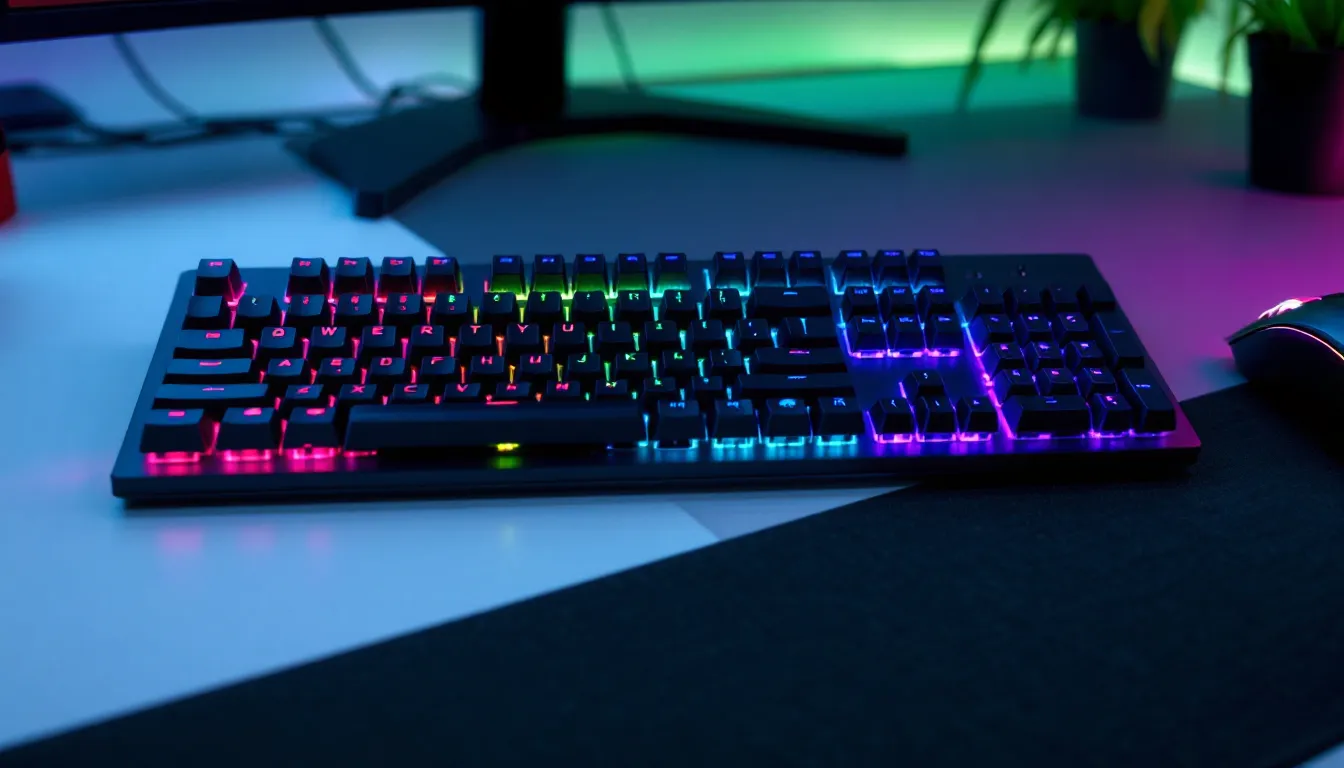
MSI’s transition from motherboards and graphics cards to gaming peripherals has been surprisingly smooth. Their keyboards, specifically, have carved out a respectable niche in a market dominated by Razer, Corsair, and Logitech. What makes an MSI gaming keyboard worth considering? It’s not just about brand loyalty, these boards bring solid build quality, competitive pricing, and features that cater to both casual players grinding through single-player campaigns and competitive gamers chasing millisecond advantages. Whether someone’s looking for their first mechanical keyboard or upgrading from a budget membrane board, understanding what MSI offers can save both money and buyer’s remorse. This guide breaks down everything from switch types and RGB ecosystems to specific models that deliver in 2026’s evolving gaming landscape.
Key Takeaways
- MSI gaming keyboards deliver 85-90% of premium performance at 60-70% of the cost by focusing on fundamentals like reliable switches, robust software, and competitive pricing rather than trend-chasing gimmicks.
- Choose mechanical switches over membrane for gaming: the Vigor GK70 and GK80 offer genuine Cherry MX options with faster actuation and better durability than budget membrane boards.
- Form factor matters for ergonomics and gameplay—TKL layouts like the GK80 TKL improve shoulder positioning for FPS players, while full-size boards suit MMO and productivity users needing numpad access.
- The MSI Vigor GK80 Silver’s 1.2mm actuation point (versus standard 2mm) delivers 10-20ms faster input registration, critical for competitive esports titles like Valorant and Counter-Strike 2.
- MSI Center software includes essential macro programming, key remapping, and game-specific profiles, though it lacks cloud sync found in Corsair iCUE and Razer Synapse.
- Regular maintenance—weekly compressed air cleaning, monthly keycap soaks, and firmware updates—extends your MSI gaming keyboard lifespan to 5-7 years with proper care.
Why MSI Gaming Keyboards Stand Out in the Competitive Market
MSI doesn’t try to reinvent the wheel with their keyboards, and that’s actually a strength. While competitors chase gimmicks like built-in OLED screens or modular designs, MSI focuses on fundamentals: reliable switches, robust software, and pricing that undercuts premium brands by 15-25% without feeling cheap.
Their Per-Key RGB implementation rivals anything from Corsair’s iCUE ecosystem, and the Dragon Center software (now integrated into MSI Center as of 2024) handles macro programming with minimal bloat. The brand’s reputation for quality control in motherboards translates well here, failure rates for their Vigor series sit below 2% according to retail return data from major outlets.
What really differentiates MSI is their switch variety. Unlike brands locked into exclusive partnerships, MSI boards ship with Cherry MX, Kailh, and their own custom MSI Mech switches depending on the model. This flexibility means buyers aren’t forced into a single tactile experience. For gamers who know they prefer Cherry MX Reds for FPS games but want a budget option, MSI delivers without compromise.
Key Features That Define MSI Gaming Keyboards
Mechanical vs. Membrane: Understanding MSI’s Switch Options
MSI’s lineup includes both mechanical and membrane keyboards, though their mechanical offerings dominate the performance tier. The Vigor GK50 Elite uses membrane switches with a claimed 10-million-keystroke lifespan, decent for casual gaming but noticeably mushier than mechanical alternatives.
Mechanical options split into three camps:
- Cherry MX switches: Found in premium models like the GK70 and GK80. Cherry MX Reds (linear, 45g actuation) dominate MSI’s FPS-focused boards, while MX Browns (tactile, 55g) appear in productivity-hybrid models.
- Kailh Box switches: The GK50 Low Profile uses Kailh Choc switches with 3.2mm total travel, significantly shorter than standard 4mm switches. Great for rapid tapping in MOBAs, less satisfying for typing.
- MSI Mech switches: Custom-designed switches in budget models. They’re Cherry MX clones with slightly scratchier feel but identical 2mm actuation points. Sound profile skews louder than genuine Cherry switches.
Switch choice matters more than marketing suggests. A professional gamer’s peripheral setup often reveals preference for specific actuation forces, MSI’s variety lets players match their hardware to playstyle without brand-hopping.
RGB Lighting and Customization Capabilities
Mystic Light integration is MSI’s RGB ecosystem, syncing keyboards with compatible motherboards, GPUs, and case fans. The Vigor GK series supports full per-key RGB with 16.8 million color options, though the reality is most gamers stick to 5-6 preset profiles.
Customization depth:
- Layer-based effects: Stack static colors with wave patterns or reactive lighting (keys light up on press).
- Game-specific profiles: Auto-switch lighting when launching games via MSI Center. Launching Valorant can trigger red WASD highlighting, for example.
- Brightness granularity: 10 levels of brightness adjustment, crucial for late-night gaming without eyestrain.
The GK70’s edge lighting adds underglow without being obnoxious. Unlike Razer’s Chroma, which sometimes feels like a nightclub threw up on a desk, MSI’s default profiles stay tasteful. Advanced users can script custom effects via SDK integration, though this requires comfort with basic coding.
Build Quality and Durability Standards
MSI constructs their mid-tier and up keyboards with aluminum top plates rather than plastic. The GK80’s brushed aluminum chassis adds 300g of weight compared to plastic competitors, reducing flex during intense gameplay. This matters in games like Tekken 8 where simultaneous key presses strain cheaper boards.
Keycap quality varies by model:
- Budget tier (GK30, GK40): ABS plastic keycaps that develop shine after 6-8 months of heavy use.
- Mid-tier (GK50, GK60): Double-shot PBR keycaps with legends that won’t fade. Textured finish resists finger oils better.
- Premium tier (GK70, GK80): Same double-shot PBR but thicker walls (1.5mm vs. 1.2mm), producing deeper sound.
Braided USB cables with gold-plated connectors come standard on $80+ models. Detachable cables (USB-C on 2025+ models) simplify transport for LAN events. The GK80 TKL includes a magnetic wrist rest that actually stays put, many competitors’ rests slide during gameplay.
Top MSI Gaming Keyboard Models to Consider in 2026
MSI Vigor GK Series: Performance-Driven Mechanical Keyboards
The Vigor GK70 represents MSI’s sweet spot for most gamers. Released in Q3 2025 and updated with firmware v1.3.2 in January 2026, it packs Cherry MX Red switches, full N-key rollover, and 1ms response time over USB. Street price hovers around $109, occasionally dropping to $89 during sales.
Key specs:
- Actuation force: 45g (Cherry MX Red)
- Polling rate: 1000Hz
- Onboard memory: 3 profile slots
- Media controls: Dedicated volume wheel and play/pause buttons
- Weight: 1,050g
The GK80 TKL strips the numpad for desk space savings. At 360mm width (vs. GK70’s 440mm), it leaves room for low-sensitivity FPS mouse movements. Identical switch options and features as the GK70, but $15 cheaper at $94 MSRP. TKL layouts aren’t just about size, they promote healthier shoulder positioning by allowing narrower arm placement.
For MMO players, the GK60 Plus adds six programmable macro keys on the left edge. Each key supports 20-command sequences with adjustable delays. It’s niche, but Final Fantasy XIV players running 40+ hotbar abilities will appreciate dedicated macro rows over modifier key combos.
Budget-Friendly Options for Entry-Level Gamers
The Vigor GK30 sits at the entry point, $44 for a membrane board with zone-based RGB (not per-key). It’s functional for casual gaming but skippable if the budget allows another $30. Membrane switches introduce 10-15ms additional latency versus mechanical, noticeable in competitive environments.
Better value lives in the GK50 Low Profile. At $69, it uses Kailh Choc Red switches (linear, 50g actuation) in a slim 22mm chassis. Total key travel of 3.2mm means faster actuation than standard boards, valuable in games like League of Legends where ability rotation speed determines trades. Technology hardware reviewers consistently rate low-profile switches as underappreciated for gaming even though marketing favoring standard-height switches.
The GK50 Elite (not to be confused with the Low Profile) offers membrane switches with anti-ghosting on 19 keys. It’s a compromise board, better than generic office keyboards but eclipsed by any true mechanical option. Only recommended if the absolute ceiling is $50.
Premium Models for Esports and Competitive Gaming
The Vigor GK80 Silver uses Cherry MX Speed Silver switches, 1.2mm actuation point versus the standard 2mm. This 0.8mm difference translates to 10-20ms faster input registration. For context, that’s the margin between landing a headshot or eating one in Valorant‘s Immortal+ ranks.
Premium features:
- Aluminum frame with reinforced PCB: Eliminates flex even during rage-induced key slamming.
- Hot-swappable switches: User-replaceable switches without soldering. Mix Cherry MX Reds for WASD with tactile Browns for ability keys.
- Tournament mode: Disables Windows key and alt-tab to prevent accidental exits mid-match.
- USB passthrough: Full-power USB port on the keyboard for mouse connection, reducing cable clutter.
At $159, it competes directly with Corsair’s K70 RGB and Logitech’s G Pro X. The MSI undercuts both by $20-30 while matching features. The catch? MSI’s software ecosystem isn’t as mature, profile syncing across multiple PCs requires manual export/import rather than cloud saves.
The GK70 Wireless adds 2.4GHz dongle connectivity with 1ms response (matching wired performance) and Bluetooth 5.1 for secondary device pairing. Battery lasts 30 hours with RGB active, 80 hours with lighting off. It’s $139, premium pricing for wireless, but justified if cable management is a priority.
How to Choose the Right MSI Gaming Keyboard for Your Needs
Gaming Genre Considerations: FPS, MOBA, and Racing Games
FPS games (CS2, Valorant, Call of Duty) benefit from linear switches with light actuation. The GK70 with Cherry MX Reds or the GK80 Silver with Speed switches minimize keystroke travel. N-key rollover is non-negotiable, holding W+A+Shift+Ctrl simultaneously (sprinting diagonal while crouching) needs zero key masking.
MOBA players (Dota 2, League) prioritize macro keys and rapid ability cycling. The GK60 Plus’s six macro keys can store item-buy sequences or complex combo chains. Alternative option: program F1-F6 as macros on any MSI board via MSI Center if dedicated macro keys aren’t mandatory. Tactile switches (Cherry MX Brown) provide feedback without the click noise that annoys teammates during Discord calls.
Racing sim enthusiasts often overlook keyboards, focusing on wheels and pedals. But menu navigation and pit strategy adjustments in iRacing or Assetto Corsa Competizione still need reliable input. A budget GK50 Low Profile works fine here, save money for better pedals instead.
MMO and RPG players need every key. Full-size layouts (GK70, GK60 Plus) with numpads support extensive hotbar setups. Avoid TKL models unless using a separate numpad or MMO mouse with 12-button grids.
Form Factor: Full-Size, TKL, and Compact Layouts
Full-size keyboards (440mm width) include numpad, function row, and nav cluster. They’re ideal for:
- Productivity hybrids who spreadsheet between gaming sessions
- MMO players binding numpad keys to abilities
- Anyone with ample desk space (30+ inches)
Downside: wider shoulder positioning when gaming. Arm angle exceeds 90° for right-handed mouse users, causing fatigue during multi-hour sessions.
TKL (Tenkeyless) boards (360mm width) ditch the numpad:
- Better ergonomics for FPS players using low DPI (400-800) and large mousepad sweeps
- Easier transport to LAN events
- Still includes F-row and arrow keys
The GK80 TKL exemplifies this category. Players who never touch the numpad won’t miss it.
Compact layouts (60% and 65%) aren’t MSI’s strength, the brand focuses on TKL and full-size. The GK50 Low Profile is as small as MSI goes, and it’s still technically a full-size board just with lower profile.
Form factor choice depends on mouse space and game type more than personal preference. Someone optimizing their gaming setup will often match pro players’ TKL preference for competitive FPS titles.
Software and Macro Programming with MSI Center
MSI Center (formerly Dragon Center) handles keyboard customization across Windows 10 and 11. The software interface underwent a redesign in version 3.0 (released August 2024), improving usability but fragmenting compatibility with pre-2023 keyboards, older models still require Dragon Center legacy version.
Core functions:
- Key remapping: Reassign any key to different functions. Swap Caps Lock to Ctrl, a common tweak for Minecraft PvP players who crouch frequently.
- Macro recording: Record keystroke sequences with millisecond-precise timing. Advanced mode allows manual delay editing, critical for scripting perfect Tekken combos or Street Fighter links.
- Profile management: Create game-specific profiles that auto-switch when launching executables. Launching Apex Legends loads FPS profile with red WASD lighting: launching Photoshop switches to productivity layout with function key shortcuts.
- Lighting control: Mystic Light sync, effect layering, and per-key color assignment. The color picker supports hex code input for brand color matching.
Macro limitations exist. Single keypress macros can’t include sub-5ms delays, the software rounds to 5ms increments. This prevents frame-perfect inputs in fighting games where 1-2 frame links separate intermediate and advanced players. Workaround: use AutoHotkey scripts externally, though this risks anti-cheat flags in competitive games.
Onboard memory stores up to three profiles directly on the keyboard. Plug the board into a different PC and macros persist without software installation. Useful for tournament setups where software installation isn’t allowed.
MSI Center’s weakness: no cloud sync. Corsair’s iCUE and Razer Synapse store profiles server-side: MSI requires manual export/import via .msiprofile files. Players using multiple PCs (home desktop, travel laptop) need to remember file transfers or accept reconfiguring settings.
Performance Benefits: Response Time and Anti-Ghosting Technology
Polling rate determines how often the keyboard reports input to the PC. MSI’s mechanical keyboards universally support 1000Hz (1ms) polling. Each millisecond, the keyboard checks for keypresses and transmits data. Higher polling reduces input lag, the time between physical keypress and on-screen action.
Comparison:
- 125Hz (8ms): Budget office keyboards
- 500Hz (2ms): Mid-tier gaming boards from 2015-2018 era
- 1000Hz (1ms): Current standard for competitive gaming
Does 1ms vs. 2ms matter? In isolation, humans can’t perceive 1ms differences. Cumulatively, adding monitor response time (1-5ms), system latency (10-30ms), and network ping (20-50ms), every millisecond compounds. Competitive Counter-Strike 2 players chasing Global Elite ranks optimize every variable. Casual players won’t notice.
N-key rollover (NKRO) means simultaneous keypresses register without ghosting. MSI’s Vigor series supports full NKRO over USB, press all 104 keys simultaneously and the PC registers every input. Practical limit is 6-8 keys in actual gameplay (W+A+Shift+Space+Ctrl+1+2+Tab during hectic engagements).
Anti-ghosting prevents phantom inputs. Older matrix scanning sent false signals when three+ keys in specific configurations were pressed. Modern gaming keyboards use diode-isolated circuits preventing this entirely. MSI implements this across all mechanical models: even budget GK30 membrane boards have anti-ghosting on primary gaming keys (WASD, QERF, Space, Ctrl, Shift).
Actuation point consistency affects feel more than raw speed. Cherry MX switches guarantee ±0.2mm variance across millions of keypresses. Cheaper clone switches can drift ±0.5mm, causing inconsistent input timing. MSI’s use of genuine Cherry switches in mid-tier+ models ensures reliability over 50+ million keystrokes.
Real-world impact: In Valorant, counter-strafing (tapping opposite movement key to stop instantly) requires precise timing. A keyboard with inconsistent actuation makes developing muscle memory harder. The difference between hitting Immortal or plateauing in Diamond often comes down to input consistency, not just aim.
MSI Gaming Keyboards vs. Competing Brands
Corsair K70 RGB ($149) vs. MSI GK80 Silver ($159):
Both use Cherry MX switches, aluminum frames, and 1000Hz polling. Corsair edges ahead in software maturity, iCUE offers superior lighting effects and cloud profile sync. MSI counters with hot-swappable switches on the GK80 Silver (K70 requires soldering for switch replacement). Price parity makes this a toss-up based on ecosystem preference.
Razer BlackWidow V3 ($139) vs. MSI GK70 ($109):
Razer uses proprietary Green switches (clicky, 50g actuation) while MSI offers genuine Cherry MX. Razer’s media keys are touch-sensitive: MSI uses physical buttons (more reliable, less flashy). MSI wins on value, $30 less for equivalent build quality. Razer’s Synapse software is more polished but requires constant online authentication, annoying for offline gaming.
Logitech G Pro X ($129) vs. MSI GK80 Silver ($159):
Both feature hot-swappable switches. Logitech’s GX switches feel scratchier than Cherry MX but come with three switch options in-box (linear, tactile, clicky). MSI ships with one switch type but offers broader Cherry MX compatibility. Logitech’s compact TKL design suits minimalist setups: MSI’s RGB is more vibrant. Choosing between them depends on whether someone values switch variety (Logitech) or lighting customization (MSI).
SteelSeries Apex Pro ($199) vs. MSI Vigor lineup:
SteelSeries uses adjustable OmniPoint switches (0.4mm to 3.6mm actuation customization). It’s technologically superior but $40-90 more expensive than MSI equivalents. Most gamers can’t leverage adjustable actuation, they set it once and forget. MSI delivers 90% of the performance at 55-75% of the cost.
Brand loyalty often decides peripherals. Players invested in Corsair iCUE or Razer Chroma ecosystems want matching lighting sync. MSI suits builders already using MSI motherboards/GPUs or those prioritizing value over ecosystem lock-in. Independent testing from tech review publications consistently ranks MSI keyboards in the upper-mid tier for performance-per-dollar.
Maintenance Tips to Extend Your MSI Keyboard’s Lifespan
Weekly cleaning prevents buildup. Use compressed air to blast crumbs and dust from under keycaps. Hold the keyboard at 75° angle while spraying to let debris fall out rather than deeper into switches. Avoid air dusters with bitterant additives (tetrafluoroethane), residue can gum up switch housings.
Monthly deep clean involves keycap removal:
- Photograph the keyboard layout (helps with reassembly).
- Use the included keycap puller or improvise with two paperclips bent into hooks.
- Remove all keycaps and soak in warm water with dish soap for 15 minutes.
- Scrub the exposed PCB and switches with a dry microfiber cloth (never use water directly on electronics).
- Let keycaps air dry completely (4-6 hours) before reinstalling.
Switch lubrication improves feel and reduces scratchiness. This is advanced maintenance requiring disassembly:
- Use dielectric grease (Krytox GPL 205 G0 is the enthusiast standard).
- Apply to switch stems and springs, avoiding contact points where it can interfere with electrical connection.
- Hot-swappable boards (GK80 Silver) make this easier, pop switches out, lube, reinstall.
- Non-swappable boards require desoldering, risky without experience.
Only attempt lubrication if comfortable with disassembly. Incorrectly lubed switches feel mushy and can malfunction.
Cable care extends USB longevity:
- Detachable cables (USB-C models): unplug from the keyboard end, not the PC end, to reduce connector wear.
- Permanent cables: route with minimal bending near the keyboard end where stress concentration causes fraying.
- Replace frayed cables immediately, exposed wires risk short circuits.
Firmware updates arrive 2-3 times yearly. MSI Center notifies when updates are available. These often fix compatibility issues with Windows updates or add new lighting effects. Always update firmware with a stable power connection, interruptions during flashing can brick the keyboard.
Spill response:
- Immediately unplug the keyboard.
- Flip upside-down to drain liquid away from PCB.
- Remove keycaps and dry thoroughly with paper towels.
- Let air dry for 48+ hours before reconnecting.
- Water is less damaging than sugary/sticky drinks, coffee and soda often require full disassembly for cleaning.
Mechanical keyboards survive spills better than membrane boards since switches are individually sealed. The GK70’s IP32 rating (dust and drip protection) offers basic resistance but isn’t spill-proof.
Storage for travel:
- Use a padded keyboard sleeve or hard case.
- Wrap detachable cables separately to prevent connector damage.
- Remove custom keycaps if particularly valuable, artisan keycaps costing $30-50 should travel in individual containers.
Proper maintenance pushes keyboard lifespan past 5-7 years. Cherry MX switches are rated for 50 million keypresses: at 10,000 keypresses daily, that’s 13+ years of theoretical use. In practice, keycap shine, cable fraying, and RGB LED failures occur around year 5-6 with heavy use.
Conclusion
MSI’s gaming keyboards occupy a specific market position: reliable performance at accessible prices without chasing every trend. They won’t revolutionize how someone games, but they won’t hold anyone back either. The Vigor GK70 and GK80 series offer genuine Cherry MX switches, robust build quality, and competitive pricing that undercuts Corsair and Razer by meaningful margins.
Choosing the right model comes down to budget and use case. Entry-level gamers should start with the GK50 Low Profile, it’s mechanical, $69, and avoids membrane compromises. Competitive players benefit from the GK80 Silver’s Speed switches and hot-swappable design. Content creators and MMO players want the GK60 Plus for macro keys or the full-size GK70 for numpad access.
MSI Center software lags behind iCUE and Synapse in polish, but core functionality, macros, remapping, RGB control, works reliably. The lack of cloud sync frustrates multi-PC users, though onboard memory partially compensates.
In a market where keyboards can push $250+ for marginal gains, MSI delivers 85-90% of premium performance at 60-70% of the cost. That’s the value proposition. They’re not flashy, not revolutionary, but solidly engineered tools that let players focus on gameplay rather than fighting their hardware. For most gamers, that’s exactly what a keyboard should be.


