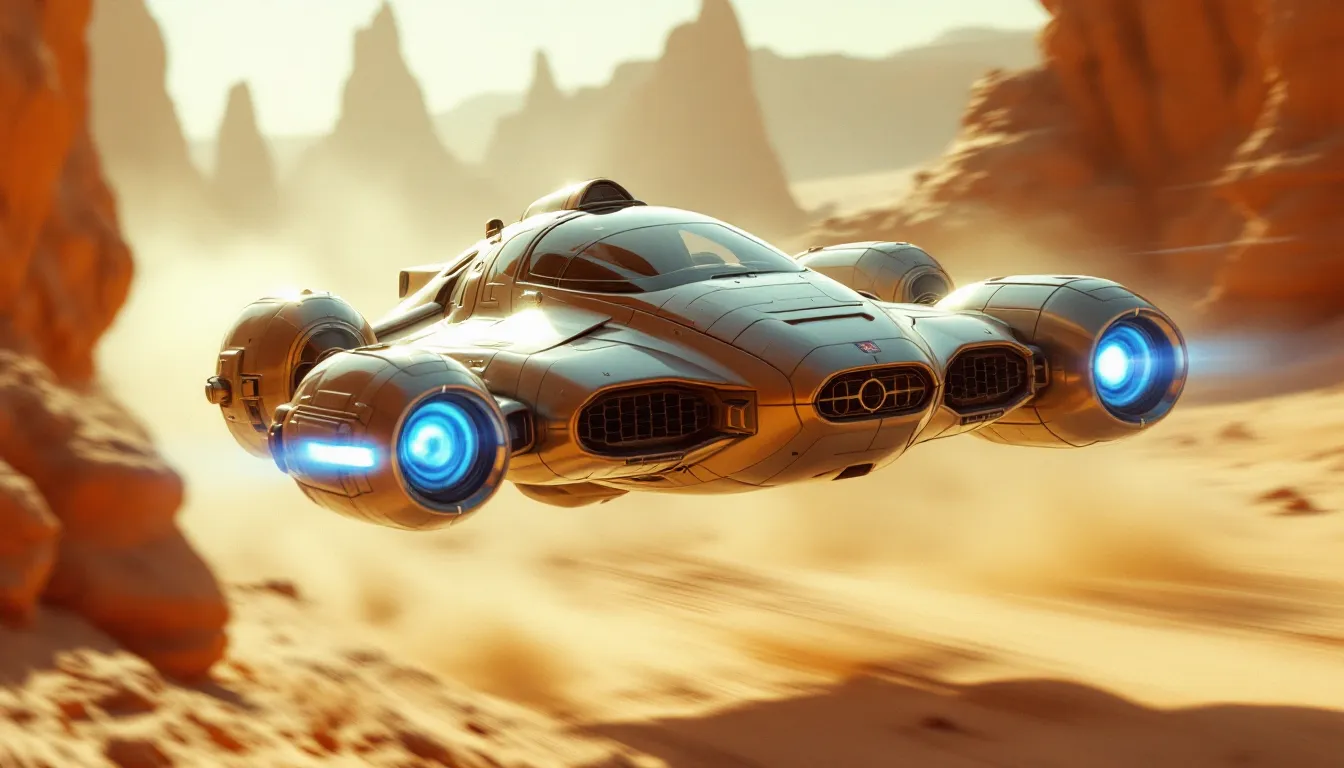
Few moments in the Star Wars prequel trilogy captured pure adrenaline like the Boonta Eve Classic pod race on Tatooine. Anakin Skywalker threading his pod through canyons at 600+ mph while rival racers exploded around him wasn’t just a spectacle, it was a blueprint for some genuinely thrilling racing games. While the prequels remain divisive, the pod racing games they spawned earned a devoted following that persists decades later. From the legendary N64 and PC title that defined the genre to lesser-known sequels and arcade experiments, Star Wars pod racing games carved out a unique niche in racing game history. This guide covers every pod racing game released, what made them special, where they stumbled, and how you can still experience that high-speed Tatooine rush today.
Key Takeaways
- Star Wars Episode I: Racer remains the gold standard for pod racing games, with innovative dual-engine mechanics and over 25 tracks that influenced modern sci-fi racing design.
- Pod racing games feature unique high-risk, high-reward gameplay where vehicles can permanently explode mid-race, creating tension and strategic depth rarely seen in modern racing titles.
- The 2020 modern ports of Episode I: Racer are now available on PlayStation, Xbox, Nintendo Switch, and PC for $14.99, making this classic franchise accessible without original hardware.
- Star Wars Racer Revenge shifted focus to combat-focused racing mechanics but received mixed reception and lacks official modern availability, existing only through secondhand PS2 copies or emulation.
- Online multiplayer and expanded customization remain the most-requested features for a hypothetical new pod racing game, as fan demand persists 25+ years after the original release.
The Legacy of Pod Racing in Star Wars Gaming
Pod racing hit gaming in 1999, riding the wave of The Phantom Menace hype. LucasArts saw potential in the pod race sequence and greenlit what would become one of the most successful Star Wars spin-off games of its era.
Star Wars Episode I: Racer launched on Nintendo 64, PC, and eventually Dreamcast, selling over 3.1 million copies and becoming the best-selling sci-fi racing game on N64. It wasn’t just a movie tie-in, it was a legitimately compelling arcade racer with depth that kept players coming back. The game’s success spawned a PlayStation 2 sequel, arcade versions, and even a Game Boy Color port, though quality varied dramatically across platforms.
What set pod racing games apart was their fusion of Star Wars lore with genuinely dangerous racing mechanics. Pods could explode mid-race. Engines overheated. Rival racers actively tried to wreck you. This wasn’t Mario Kart with lightsabers, it was a high-risk, high-reward racing experience that demanded skill and nerve. The unique two-engine pod design, connected by energy binders to a cockpit, created handling characteristics unlike anything else in racing games.
The franchise’s influence extended beyond dedicated pod racing titles. References and mini-games appeared in broader Star Wars games throughout the 2000s, keeping the concept alive even after dedicated sequels stopped. For a subgenre born from a single movie sequence, pod racing’s gaming legacy proved surprisingly durable.
Star Wars Episode I: Racer – The Definitive Pod Racing Experience
Released in May 1999 for N64 and PC, Episode I: Racer remains the gold standard for pod racing games. LucasArts captured the sensation of piloting an unstable, overpowered death machine through alien landscapes better than any racing game before or since.
Gameplay Mechanics and Controls
The core gameplay loop revolved around managing speed versus control. Your pod featured dual engines that could be boosted independently or together, creating a risk-reward system where pushing too hard resulted in catastrophic engine failure. Overheating was a constant threat, visual and audio cues warned you when engines glowed red-hot, forcing you to back off the throttle or risk explosion.
Repair mechanics added another layer. Taking damage from collisions or weapons fire required holding the repair button, slowing you down but preventing total pod destruction. Smart players learned to repair during straightaways, preserving speed through technical sections.
On N64, the game supported the expansion pak for higher resolution and draw distance, a significant advantage given the blistering speeds (some pods exceeded 600 mph fully upgraded). PC versions offered superior graphics and smoother framerates, making it the definitive way to play for years until modern ports arrived.
Controls adapted to each platform’s strengths. N64’s analog stick provided precise steering, while PC keyboard controls felt twitchier but allowed faster input switching. The learning curve was steep, novice players struggled with oversteering and crashes, but mastering the drift mechanics and boost timing felt genuinely rewarding.
Tracks, Planets, and Environments
The game featured 25 tracks across eight planets, each with distinct environmental hazards and visual identities. Tatooine’s Boonta Eve Classic recreated the movie sequence with impressive fidelity, but deeper cuts showcased LucasArts’ world-building.
Notable tracks included:
- Malastare (Pixelito Challenge): Narrow cave systems with stalactites that could instantly destroy your pod
- Mon Gaan (Grabvine Gateway): Underwater sections with crushing pressure mechanics
- Baroonda (Baroo Coast): Massive jumps over lava flows with limited landing zones
- Ord Ibanna (Ice Marshs): Slippery ice tracks where oversteering meant sliding into walls
Track design rewarded memorization. Hidden shortcuts existed on nearly every course, shaving crucial seconds off lap times. Some required precise boost timing or risky jumps: others were obvious but technically demanding. According to early gaming coverage on IGN, the track variety was considered exceptional for its time, offering more environmental diversity than many contemporary racing titles.
Environmental hazards weren’t just visual, they actively impeded progress. Sandstorms reduced visibility, meteor showers damaged pods, and native creatures occasionally wandered onto tracks. Dynamic obstacles kept races unpredictable even after mastering racing lines.
Character Roster and Pod Customization
The roster featured 25 playable characters, most pulled from the movie’s pod race sequence, plus original designs. Each pilot came with a unique pod featuring different stats:
- Anakin Skywalker: Balanced stats, good for beginners
- Sebulba: High top speed, poor acceleration
- Ratts Tyerell: Incredible acceleration, weak durability
- Teemto Pagalies: Excellent handling, low max speed
Customization depth separated Episode I: Racer from typical licensed games. Winning races earned currency (truguts) used to purchase upgrades across six categories: traction, turning, acceleration, top speed, air brake, and cooling. Each category had multiple upgrade tiers, and different pods had different upgrade caps.
Min-maxing became essential for tournament play. Speed-focused builds sacrificed handling, creating pods that were lightning-fast on straightaways but nightmares in technical sections. Balanced builds suited most tracks but lacked the edge for time trials. The meta favored acceleration and cooling upgrades early, then pushing top speed once you’d mastered boost management.
Unlocking hidden characters required specific achievements, finishing tournaments, finding shortcuts, or winning with particular racers. This progression system gave the game legs beyond the campaign, encouraging experimentation with different pod configurations.
Platform Availability and Modern Ports
Originally released on N64 (May 1999), PC (November 1999), and Dreamcast (May 2000), Episode I: Racer disappeared from digital storefronts for years. Rights issues and LucasArts’ closure in 2013 left the game in limbo.
Modern availability changed in 2020 when Aspyr released updated ports for PlayStation 4, Xbox One, and Nintendo Switch. These versions run at higher resolutions (up to 1080p on Switch, higher on other platforms) with improved textures and stable framerates. The core gameplay remains untouched, no rebalancing or additional content, just the original game running on modern hardware.
The Switch version proved particularly popular due to portability and motion control support. While purists debate whether analog sticks or motion controls work better, the option pleased casual players.
PC players can still find the original 1999 version on GOG, which runs on modern Windows with community patches addressing compatibility issues. Graphics mods exist but don’t fundamentally change the experience, the game’s visual design holds up surprisingly well.
No official announcements exist for a full remake or remaster, though fan demand remains strong. The 2020 ports sold well enough to prove ongoing commercial viability, keeping hope alive for future franchise entries.
Star Wars Racer Revenge: The PlayStation 2 Sequel
LucasArts followed up their N64 hit with Star Wars Racer Revenge, launching exclusively on PlayStation 2 in February 2002. Built on a new engine and developed by Rainbow Studios (known for Motocross Madness), the sequel aimed to evolve the formula while capitalizing on PS2’s hardware capabilities.
What Sets Racer Revenge Apart
Visually, Racer Revenge was a significant leap. Running on PS2 hardware, it featured detailed pod models, more complex track geometry, and improved particle effects for engine flames and explosions. Draw distance increased dramatically, letting players see further ahead, crucial at speeds exceeding 700 mph.
The plot added narrative context absent from the first game. Set eight years after The Phantom Menace, the story followed a revenge-driven narrative where racers competed in increasingly dangerous circuits. Sebulba returned as a primary antagonist, and cutscenes between races attempted to build character dynamics. Execution was cheesy, but it gave structure to the campaign.
Gameplay refinements included smoother handling and more forgiving collision detection. The first game punished mistakes harshly: Racer Revenge allowed more margin for error, making it more accessible but less demanding for veterans. Boost mechanics were simplified, gone were individual engine boosts, replaced with a single unified boost gauge.
The roster shrank to 13 playable characters, focusing on racers with developed backstories rather than the original’s deep bench of obscure aliens. Pod customization remained but with fewer upgrade tiers, streamlining progression at the cost of depth.
Combat Racing Features and New Mechanics
The defining addition was aggressive combat. While the original featured incidental contact and weapons as background elements, Racer Revenge made attacking opponents a core mechanic.
Offensive capabilities included:
- Side-ramming: Building a combo meter by sideswiping opponents, eventually triggering their pod’s destruction
- Slipstream attacks: Drafting behind rivals then boosting to deliver a devastating rear hit
- Targeted aggression: Focusing attacks on specific racers to eliminate them from competition
This shift toward combat racing drew comparisons to Wipeout and F-Zero GX, though execution was less polished than either. The combo system encouraged aggressive play, land enough hits and your opponent exploded in spectacular fashion, permanently removing them from the race.
Defensive mechanics included evasive maneuvers and counter-boosts, but the game heavily favored offense. Conservative racing rarely won: you needed to attack. This fundamentally changed the feel from the original’s focus on precision racing and boost management.
Critical reception was mixed. Review aggregators placed it around 71-74/100, solid but unremarkable. Fans of the original were divided: some appreciated the faster pace and combat focus, others felt it diluted what made pod racing unique. Sales figures were never officially released, but the game underperformed expectations, ending the franchise’s console run.
No ports or remasters of Racer Revenge exist as of 2026. PS2 copies circulate on secondhand markets, and the game runs on PCSX2 emulator with good compatibility, but there’s no official modern release. Its absence from digital storefronts suggests Disney and Aspyr prioritized the more beloved original.
Pod Racing in Other Star Wars Games
Beyond dedicated titles, pod racing appeared in various Star Wars games throughout the 2000s, with mixed results.
Super Bombad Racing and Arcade Appearances
Super Bombad Racing (2001, PS2) was LucasArts’ attempt at a kart racer, featuring chibi-style Star Wars characters in vehicles from across the franchise. Pod racers appeared as playable vehicles alongside landspeeders and speeder bikes. The game targeted younger audiences with simplified controls and power-up-based gameplay reminiscent of Mario Kart.
It was… not good. Reviews savaged it for unresponsive controls, uninspired track design, and a cynical cash-grab feel. Metacritic scores hovered around 41/100. Pod racing fans found nothing of value here, the handling bore no resemblance to actual pod racing mechanics, and the cartoony aesthetic clashed with the gritty, dangerous vibe that made the concept appealing.
Star Wars Racer Arcade (2000) by Sega was a different beast. An actual sit-down arcade cabinet with motion controls and force feedback, it offered a physical pod racing experience unavailable at home. The game featured simplified versions of tracks from Episode I: Racer with flashier visuals and exaggerated speed effects tailored for arcade spectacle.
Limited cabinet production meant few players experienced it outside dedicated arcades, and detailed information on Twinfinite and similar gaming sites remained scarce compared to console releases. Cabinets command high prices among collectors today, more as Star Wars memorabilia than functional arcade machines.
Pod Racing Mini-Games in Broader Star Wars Titles
Several games included pod racing as side content:
Lego Star Wars: The Complete Saga (2007) featured a simplified pod racing level recreating the Boonta Eve Classic. With Lego-style physics and humor, it was more comedic set piece than serious racing. You couldn’t lose, pods rebuilt themselves instantly after crashes, removing all stakes.
Star Wars Galaxies (2003 MMO) included speeder racing that borrowed aesthetic elements from pod racing without direct pod vehicles. Players raced custom speeders on dedicated tracks, and while mechanically distinct, the community often called it “pod racing” colloquially.
Kinect Star Wars (2012) featured a pod racing mode using motion controls, allowing players to “steer” with their bodies. Execution was predictably janky, Kinect’s limitations made precision impossible, resulting in a frustrating experience that reinforced why pod racing worked best with traditional controls.
None of these implementations captured what made dedicated pod racing games engaging. They existed as fan service, acknowledging the concept’s place in Star Wars lore without investing in proper racing mechanics.
How Star Wars Pod Racing Games Compare to Modern Racing Titles
Evaluating 1990s and early 2000s racing games against contemporary standards requires context. Pod racing games occupy a strange middle ground, nostalgic classics that influenced later racers, but mechanically outdated in key areas.
Speed, Adrenaline, and Unique Racing Mechanics
Episode I: Racer still holds up as one of the fastest-feeling racing games ever made. Hitting 600+ mph in Anakin’s fully upgraded pod generates genuine sensation of speed that many modern racers struggle to match. Only games like Wipeout Omega Collection, F-Zero GX, and Redout consistently deliver comparable velocity.
The two-engine pod design remains mechanically unique. No mainstream racing game since has replicated the asymmetric thrust control and independent engine management. It created handling characteristics that were difficult to master but deeply satisfying once you internalized the rhythm of boost, coast, and repair.
Destructive racing where vehicles explode permanently mid-race was uncommon even in 1999 and practically extinct now. Modern racers favor respawns and rubberbanding to keep fields competitive. The stakes in pod racing, one major mistake could end your race, created tension that contemporary games smooth out for accessibility.
The risk-reward boost system with overheating and catastrophic failure influenced later sci-fi racers. Wipeout, Fast RMX, and Redout all feature boost management where overuse causes damage or slowdown, though implementations differ. Pod racing pioneered making boost a dangerous tool rather than a free speed button.
Analysis on GameSpot and similar outlets often credits Episode I: Racer with proving licensed games could deliver mechanically sound racing experiences, not just movie tie-in cash grabs. It set a benchmark other licensed racers spent years trying to reach.
Nostalgia Factor vs. Contemporary Racing Standards
Revisiting Episode I: Racer in 2026 reveals both timeless design and dated elements.
What still works:
- Core racing mechanics remain engaging and skill-based
- Track design encourages memorization and optimization
- Upgrade progression provides meaningful long-term goals
- Sense of speed and danger unmatched by most modern racers
What shows its age:
- Visual fidelity, even in 2020 ports, lags far behind contemporary standards
- AI rubberbanding feels more obvious and frustrating than it did in 1999
- Limited vehicle variety compared to modern kart racers or sim racers
- No online multiplayer in modern ports (a massive missed opportunity)
- Minimal quality-of-life features expected today (rewind, ghost replays, detailed telemetry)
The 2020 ports helped by addressing performance and compatibility but didn’t modernize gameplay. For players with nostalgia, this preservation approach works. For newcomers expecting modern racing game polish, Episode I: Racer feels archaic.
Racer Revenge aged worse. Its combat focus feels half-baked compared to dedicated combat racers like Wipeout 2048 or Burnout Paradise. The PS2 visuals and lack of modern ports leave it stranded as a curiosity rather than a playable classic.
Even though limitations, pod racing games demonstrated concepts, extreme speed, vehicle customization depth, environmental storytelling through track design, that modern racers continue exploring. They’re historical touchstones worth experiencing, even if they’re not best-in-class by 2026 standards.
Tips and Strategies for Mastering Pod Racing Games
Whether you’re tackling Episode I: Racer for the first time or chasing competitive times, these strategies will improve your performance.
Perfecting Your Racing Line and Boost Management
Racing line fundamentals apply even at 600 mph. The optimal path through corners involves entering wide, hitting the apex, and exiting wide to maintain maximum speed. Pod racing’s drift mechanics reward smooth inputs, jerky steering scrubs speed.
Drifting technique: Initiate drifts early before corners by tapping the air brake while steering. Hold the drift through the apex, then release as you straighten out. Well-executed drifts maintain higher speeds than traditional braking. Practice on Tatooine tracks first, they’re more forgiving than technical courses like Ord Ibanna.
Boost management separates good racers from great ones:
- Never boost constantly. Your engines will overheat within seconds, causing catastrophic failure. Instead, boost in bursts, 3-4 seconds on, 2-3 seconds off.
- Watch temperature indicators. On N64/Switch, engines glow progressively brighter as they overheat. On PC, HUD gauges display exact temps. When they hit red, cut throttle immediately.
- Boost on straightaways, coast through corners. Boosting while turning increases overheat rate and makes steering harder.
- Repair during low-stakes moments. Repair after clearing hazards or on long straights where you can sacrifice speed safely.
Advanced boost tactic: The “timed burst” method involves waiting until your engines cool completely, then hitting maximum boost until they nearly overheat. This cycling generates higher average speeds than continuous moderate boosting. It requires precise timing and awareness of upcoming track sections.
Shortcut mastery: Every track has at least one shortcut, some saving 5+ seconds per lap. Notable examples:
- Tatooine – Boonta Training Course: Narrow canyon pass on lap 2, requires precise entry angle
- Malastare – Pixelito Challenge: Hidden cave entrance 30 seconds into lap 1, risky but fast
- Aquilaris – Bumpy’s Breakers: Underwater tunnel accessible only with full boost reserves
Shortcuts often involve risks, tighter spaces, more hazards, or difficult entry requirements. Learning which shortcuts are worth the risk on each track is key to competitive times.
Upgrading Your Pod for Competitive Edge
Upgrade priority for campaign mode:
- Cooling (first priority): Prevents overheating, enabling more boost time. This is the highest ROI upgrade early game.
- Acceleration (second priority): Gets you to top speed faster, crucial for recovering from crashes or slow corners.
- Traction (third priority): Improves handling and reduces drift speed loss. Essential for technical tracks.
- Top Speed (fourth priority): Only matters once you’ve mastered boost management. Useless if you can’t maintain speed.
- Air Brake (situational): Helps on tracks with many tight corners, less useful on high-speed courses.
- Turning (late game): Marginal improvements once traction is maxed.
Pod selection strategy: Don’t stick with Anakin just because he’s the protagonist. His pod is mediocre mid-game. Consider:
- Early campaign: Ratts Tyerell or Teemto Pagalies for handling advantages while learning tracks
- Mid campaign: Switch to Anakin or Ody Mandrell once you’ve earned upgrade currency
- Late campaign/time trials: Sebulba or Neva Kee for maximum speed potential
Credit farming: Replay early tournament races once you’ve upgraded. Winning Amateur races with a maxed pod earns easy credits for further upgrades. The Boonta Training Course on Tatooine is fastest for credit grinding, 30-second laps add up.
Damage management: Avoid walls and obstacles aggressively. Even minor scrapes reduce top speed until you repair. In competitive races, one crash can drop you from first to last. Conservative racing beats risky aggression until you’ve mastered tracks.
Tournament approach: Championships require consistency across multiple tracks. Don’t optimize builds for single courses, balanced upgrades perform better overall. Save specialized speed builds for time trials.
Where to Play Star Wars Pod Racing Games Today
Accessing pod racing games in 2026 depends on your preferred platform and tolerance for older hardware.
Star Wars Episode I: Racer – Modern Platforms (Easiest Option)
The 2020 Aspyr ports remain the most accessible way to play. Available on:
- PlayStation 4/PS5 (via backward compatibility): $14.99 on PlayStation Store
- **Xbox One/Xbox Series X
|
S** (via backward compatibility): $14.99 on Microsoft Store
- Nintendo Switch: $14.99 on eShop, includes motion control support
- PC (GOG): Original 1999 version with compatibility patches, $9.99
These versions run natively on modern hardware with improved performance. The Switch port is particularly convenient for portable play, though resolution caps at 1080p docked, 720p handheld.
Original Hardware (For Collectors/Purists)
If you’ve got the gear:
- N64 version: Requires expansion pak for best experience. Original cartridges run $15-30 on secondhand markets. N64 hardware prices vary wildly ($80-150 depending on condition).
- Dreamcast version: Rare and expensive ($40-80 for disc). Offers marginally better visuals than N64.
- PC CD-ROM (1999): Nearly impossible to find physically. The GOG release is the same game with modern OS compatibility.
Star Wars Racer Revenge
No official modern port exists. Your options:
- Original PS2 hardware: Discs run $10-20 used. Requires working PS2 console (backward compatibility on early PS3 models works too).
- PCSX2 emulation: Best current method. The game runs excellently on PCSX2 with upscaling to 1080p or higher. Requires original disc or ISO file and moderate PC specs.
Other Pod Racing Games
Good luck. Super Bombad Racing isn’t worth tracking down. Racer Arcade cabinets occasionally appear at retro arcades or conventions. The Lego Star Wars pod racing segment is available via The Skywalker Saga (2022) on all modern platforms, though it’s a minor side activity.
Preservation Note: With Disney’s Star Wars gaming strategy focused on big-budget releases and EA/Respawn partnerships, niche titles like pod racers remain in limbo. No official announcements exist for new entries or additional remasters. The 2020 ports suggest interest exists, but nothing concrete has emerged.
For now, the 2020 Episode I: Racer release on modern consoles and Switch offers the best balance of accessibility, performance, and faithful preservation of the original experience.
The Future of Pod Racing Games: What Fans Are Hoping For
The pod racing game community remains active, advocating for new content and modern interpretations of the formula. While nothing is officially in development as of early 2026, fan discussions reveal consistent themes.
Most-Requested Features for a Hypothetical New Pod Racing Game:
Online multiplayer tops every wishlist. The 2020 ports inexplicably shipped without online functionality, limiting competition to local play. A modern pod racer with ranked online modes, ghost sharing, and competitive leaderboards would tap into the esports-adjacent racing community that thrives in games like TrackMania and F-Zero 99.
Expanded track creation and modding support could extend longevity dramatically. Imagine a robust track editor letting players design custom circuits on existing planets or entirely new worlds. Steam Workshop integration or a similar system would enable community-driven content, addressing the limited track count of original releases.
Canon integration with Disney-era Star Wars offers storytelling opportunities. Pod racing appears briefly in The Book of Boba Fett and remains canonical in current continuity. A new game could explore racing scenes in High Republic era, sequel trilogy locations, or The Mandalorian timeframe.
Modern visual overhaul is expected. While the 2020 ports upscaled resolution, textures and models remain dated. A full remake with Unreal Engine 5 or equivalent could deliver stunning alien vistas while preserving original gameplay.
VR support feels like a natural fit. The immersive cockpit perspective and extreme speeds would translate powerfully to VR. Episode I: Racer supported multiple camera angles, including first-person pod view, updating that for VR headsets could create an incredible experience, particularly with motion simulator support.
Expanded customization beyond the original’s six upgrade categories. Imagine swapping engine types, adjusting energy binder configurations, or cosmetic customization options. Modern games like Forza Horizon demonstrate how deep vehicle customization drives engagement.
Cross-platform play would maximize online population and competitive scene viability.
Why a New Pod Racing Game Makes Sense:
- The 2020 ports sold respectably, proving commercial viability
- Racing game audiences are underserved in Star Wars gaming (most recent releases focus on FPS or action-adventure)
- Indie sci-fi racers like Redout and BallisticNG prove demand for fast, skill-based futuristic racing
- Disney’s push for Star Wars content across media creates opportunities for varied game genres
Why It Might Not Happen:
- Disney and EA/Respawn prioritize big-budget, broad-appeal Star Wars games
- Racing games generally see less mainstream success than FPS or RPGs
- Nostalgia-driven remakes compete for resources with original IP development
- Licensing and development costs may not justify projected sales
Realistically, fans might see another port before a new entry. Bringing Racer Revenge to modern platforms would test waters for deeper investment. Absent official development, the community continues creating mods, speedrun categories, and fan content keeping the franchise alive.
The 25th anniversary of Episode I: Racer passed in 2024 with the 2020 re-release. The 30th anniversary in 2029 could prompt renewed interest, anniversaries often trigger remakes or remasters in gaming. Until then, fans will keep hoping that someone at Disney or a partner studio remembers that pod racing games were actually really good.
Conclusion
Star Wars pod racing games occupy a unique space in both Star Wars and racing game history. Episode I: Racer proved a movie tie-in could deliver mechanically robust, genuinely thrilling gameplay that stood on its own merits. Its successor experimented with combat-focused racing, achieving mixed results but demonstrating willingness to evolve the formula. Side appearances and arcade experiments kept the concept alive even as dedicated releases ended.
The 2020 re-releases introduced a new generation to pod racing while satisfying longtime fans with faithful preservation. Yet the lack of modern features, particularly online multiplayer, and absence of new entries leave the franchise feeling incomplete. The core concept remains compelling: high-speed, dangerous racing with unique vehicle mechanics and Star Wars aesthetics. That foundation could support a modern game with the right development team and resources.
For now, firing up Episode I: Racer on Switch, PlayStation, Xbox, or PC remains the best way to experience pod racing’s distinct thrills. Whether you’re chasing competitive lap times, hunting shortcuts, or just enjoying the sensation of piloting a screaming deathtrap at 600 mph through alien canyons, the games still deliver. The future of pod racing games remains uncertain, but their legacy as inventive, challenging racers that transcended their licensed origins is secure. Now this is pod racing.


