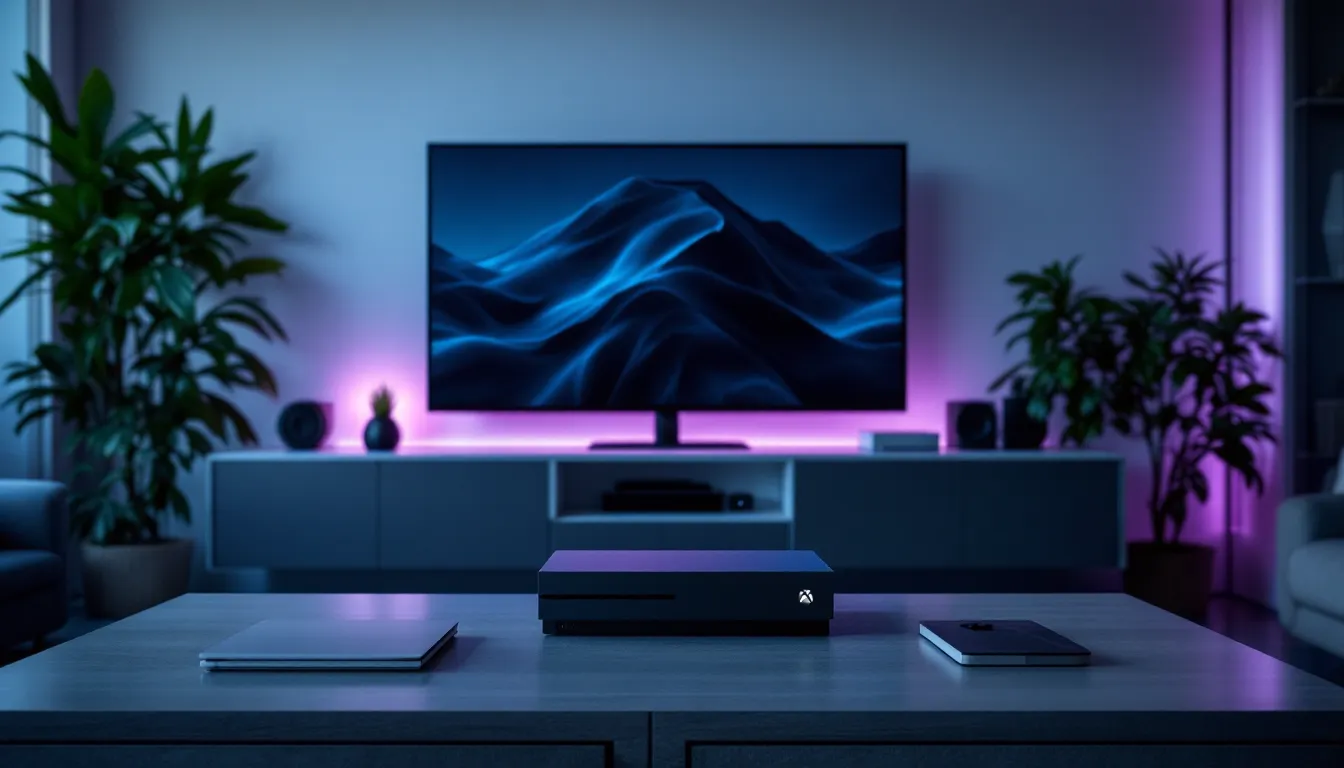
The Xbox One might be a generation behind the Series X
|
S, but it’s still a powerhouse for horror fans hunting for proper scares. With backward compatibility expanding the library, Game Pass serving up a rotating buffet of nightmares, and developers still supporting the platform into early 2026, Xbox One remains a solid choice for anyone craving atmospheric dread or heart-pounding terror.
Whether you’re chasing survival horror classics, indie gems that punch above their weight, or action-horror hybrids that keep your trigger finger busy, Xbox One’s library runs deep. This guide breaks down the best horror experiences, what makes them work on Microsoft’s eighth-gen console, and how to squeeze every drop of fear from your setup.
Key Takeaways
- Horror games on Xbox One benefit from backward compatibility, Game Pass, and developer support through early 2026, making the eighth-gen console a powerhouse for fear-driven experiences.
- Immersive audio design—especially spatial audio, Dolby Atmos, and binaural effects—is critical for horror games on Xbox One; headphones outperform soundbars for detecting directional threats and environmental cues.
- Atmospheric titles like Alien: Isolation, Resident Evil 7, and The Medium showcase how lighting, HDR support, and controller haptics create visceral dread on Xbox One hardware.
- Game Pass offers rotating horror content from AAA franchises to experimental indie games, providing cost-effective access to titles that would cost hundreds if purchased individually.
- Backward compatible classics like Dead Space, F.E.A.R., and Condemned: Criminal Origins remain essential horror experiences on Xbox One, with enhanced performance on One X models.
- Strategic gameplay mechanics—resource scarcity, limited combat options, and sanity systems—amplify fear more effectively than jump scares alone in horror games for Xbox One.
Why Xbox One Remains a Premier Platform for Horror Gaming
Xbox One’s backward compatibility pipeline is one of its secret weapons. Dozens of Xbox 360 horror titles run on the platform, many with enhanced performance. That means access to classics like Dead Space, F.E.A.R., and the original Condemned alongside modern releases.
Game Pass sweetens the deal. Microsoft’s subscription service regularly features horror games from AAA franchises to experimental indies. In early 2026, titles like A Plague Tale: Requiem, The Medium, and Scorn sit alongside rotating additions. The value proposition for horror fans is undeniable: one monthly fee unlocks a rotating library that would cost hundreds to buy outright.
Performance-wise, Xbox One S and X models handle most horror games at stable frame rates. The One X, in particular, pushes 4K textures and improved lighting in enhanced titles, which matters when every shadow could hide something waiting to kill you. HDR support amplifies atmospheric lighting, crucial for games that live and die by visual tension.
The controller deserves mention. Xbox One’s impulse triggers add tactile feedback that heightens immersion, feeling your character’s heartbeat through controller vibrations in Alien: Isolation or the rumble of approaching footsteps in Resident Evil 7 creates physical dread that complements on-screen action.
Best Horror Games on Xbox One You Need to Play
Atmospheric Survival Horror Experiences
Alien: Isolation remains the gold standard. Creative Assembly’s 2014 masterpiece puts players aboard Sevastopol Station with a single, unkillable Xenomorph that learns from your tactics. The AI adapts to hiding spots and noise patterns, creating genuine unpredictability. Enhanced for Xbox One X, it runs at near-4K with improved textures that make the retro-futuristic corridors feel tangible.
Resident Evil 7: Biohazard shifted Capcom’s flagship franchise to first-person and nailed the landing. The Baker family plantation drips with Southern Gothic rot, and the game’s audio design makes every creak and whisper matter. It’s backwards compatible with VR headsets for those brave enough to try the most intense horror experience on any platform.
The Medium leveraged Xbox Series X
|
S features but also runs on Xbox One with visual downgrades. Bloober Team’s dual-reality mechanic splits the screen between the physical world and the spirit realm, doubling the environmental storytelling. Performance takes a hit on base Xbox One consoles, but the narrative payoff justifies the occasional frame drop.
A Plague Tale: Innocence blends stealth, puzzle-solving, and swarms of literal plague rats that devour anything in darkness. The sequel, Requiem, pushes Xbox One hardware harder but maintains the franchise’s knack for desperate, claustrophobic tension.
Psychological Horror That Messes with Your Mind
Layers of Fear and its sequel trap players in ever-shifting Victorian mansions where reality refuses to hold still. Bloober Team built these games around environmental storytelling and perspective tricks, doors lead to different rooms each time, paintings watch you move, and the protagonist’s sanity frays with every artifact collected.
Observer: System Redux dumps players into a cyberpunk dystopia as a detective who hacks into suspects’ minds. Rutger Hauer’s final performance elevates the narrative, while the neural interrogation sequences distort visuals and audio into nightmarish abstractions. The Redux version adds ray tracing on Series X
|
S but runs fine on Xbox One with adjusted settings.
Hellblade: Senua’s Sacrifice uses binaural audio to simulate psychosis. Wear headphones and voices whisper from specific directions, commenting on combat, questioning decisions, and blurring the line between gameplay feedback and Senua’s deteriorating mental state. Ninja Theory’s depiction of mental illness, developed with input from neuroscientists and people living with psychosis, creates horror rooted in empathy rather than exploitation.
Action-Oriented Horror for Adrenaline Junkies
Resident Evil 2 Remake (2019) and Resident Evil 3 Remake (2020) modernize Capcom’s PlayStation classics with over-the-shoulder shooting and remixed level design. RE2’s Mr. X stalks players through Raccoon City Police Department like a relentless terminator, while RE3 cranks up the pace with Nemesis and his rocket launcher.
Dead Space (2023 remake) brought Isaac Clarke’s Ishimura nightmare to modern platforms. The remake runs on Xbox One via backward compatibility, though performance struggles on base models during intense Necromorph swarms. Strategic dismemberment, zero-gravity sections, and sound design that makes vacuum sequences genuinely unsettling keep this in rotation.
Evil Within 2 improved on its predecessor’s clunky mechanics with tighter gunplay and semi-open hub areas. Sebastian Castellanos’ descent into STEM offers boss encounters that blend psychological symbolism with grotesque creature design. The game’s unlockable weapons and New Game+ encourage replays for players who want to turn the tables on early-game terrors.
Hidden Gems and Underrated Horror Titles
Visage channels P.T.‘s suburban nightmare aesthetic into a full game. Players explore a haunted house with shifting layouts, limited light sources, and sanity mechanics that trigger hallucinations. It’s punishingly difficult and intentionally obtuse, but those who click with its rhythm find one of the genre’s most oppressive atmospheres.
The Dark Pictures Anthology entries, Man of Medan, Little Hope, and House of Ashes, deliver branching narratives with co-op support. Supermassive Games’ choose-your-own-adventure structure means decisions ripple across playthroughs, and the ability to pass controllers during couch co-op makes these excellent social horror experiences.
Maid of Sker traps players in a Welsh hotel with enemies who hunt by sound. The game’s lack of combat forces pure stealth, and the 3D audio implementation makes tracking blind pursuers through creaking hallways a tense puzzle. Its British folklore roots give it flavor distinct from American or Japanese horror tropes.
Soma often gets overlooked for Amnesia, but Frictional Games’ underwater sci-fi horror asks harder questions. What constitutes consciousness? If your brain is copied to a machine, which version is “you”? The existential dread hits different than jump scares, lingering long after the credits roll.
What Makes a Great Horror Game on Xbox One
Immersive Sound Design and Audio Cues
Horror lives and dies by audio. The best Xbox One horror games use spatial audio to create navigable soundscapes, footsteps echo from specific directions, ambient noise masks enemy movement, and silence becomes its own threat.
Dolby Atmos support elevates compatible games on Xbox One. Enabling Atmos (requires the Dolby Access app and headphones or surround system) adds height channels that make overhead threats register spatially. Resident Evil 7 uses this brilliantly: you’ll hear Jack Baker’s footsteps on the floor above before he crashes through the ceiling.
Dynamic audio mixing matters too. Games that duck music during stealth sections let players rely on environmental cues. Alien: Isolation barely uses music, forcing reliance on motion tracker beeps and the Xenomorph’s guttural hisses. The absence of a score becomes more terrifying than any orchestral stinger.
Voice acting sells narrative horror. Performance capture in games like The Medium and Hellblade grounds supernatural scenarios in human emotion. Bad voice work breaks immersion faster than any technical glitch.
Graphics, Lighting, and Atmospheric Tension
Lighting makes or breaks horror visuals. Real-time shadows, volumetric fog, and selective light sources create pockets of safety and zones of threat. The Evil Within 2 uses its semi-open town environment to contrast bright, exposed streets with pitch-black buildings where flashlight beams barely penetrate.
Xbox One X enhancements push many horror games to near-4K with improved textures. Resident Evil 2 Remake looks phenomenally gross at higher resolutions, you can see individual maggots wriggling in zombie flesh and blood pooling on reflective tile floors. HDR adds punch to firelight and muzzle flashes against oppressive darkness.
Frame rate stability prevents motion sickness during tense moments. Most Xbox One horror games target 30 FPS, which works fine for slower-paced survival horror but can feel sluggish in action-heavy sections. The One X and One S handle most titles without major drops, though base Xbox One models occasionally chug in particle-heavy scenes.
Art direction trumps raw graphical power. Little Nightmares uses stylized visuals and exaggerated proportions to create dreamlike dread that wouldn’t work with photorealism. Knowing when to abstract and when to render gore in high fidelity separates competent horror games from memorable ones.
Gameplay Mechanics That Amplify Fear
Resource scarcity forces tough decisions. Resident Evil 7‘s Madhouse difficulty limits saves to consumable cassette tapes, adding weight to every autosave point. Do you burn through ammo on this enemy or risk a stealth approach with no margin for error?
Limited combat options heighten vulnerability. Outlast removes all weapons, making chase sequences pure panic. Amnesia: Collection lets players throw objects for distraction but offers no direct defense against monsters. Powerlessness breeds fear more effectively than any jump scare.
Sanity and health management add survival layers. Visage drains sanity in darkness, triggering hallucinations that obscure real threats. Players must balance exploration with retreating to safe rooms for recovery, creating a push-pull rhythm that sustains tension.
Non-linear exploration rewards thorough players but punishes recklessness. Resident Evil 2‘s Raccoon City Police Department is a masterclass in interconnected level design, unlocking new areas requires backtracking through previously cleared zones where enemies have respawned in different configurations.
Horror Game Franchises with Xbox One Entries
Resident Evil Series on Xbox One
Capcom went all-in on Xbox One support. Resident Evil 7, RE2 Remake, RE3 Remake, and Village all run on Microsoft’s eighth-gen hardware. Village pushes Xbox One to its limits, dropping resolution and frame rate on base models during Lady Dimitrescu’s castle sections, but remains playable.
The numbered entries lean into different horror subgenres. RE7 embraces grimy, claustrophobic first-person terror. RE2 perfects third-person survival horror with limited resources and calculated risk-taking. RE3 trades pacing for spectacle, offering a more linear, action-driven romp. Village blends all three approaches into a greatest-hits package.
Resident Evil Revelations and Revelations 2 fill gaps between mainline entries. Originally handheld titles, they translate well to console with episodic structures and lighter tones. Revelations 2’s co-op campaign, where one player uses offensive abilities while the other relies on support tools, creates asymmetric teamwork rarely seen in horror.
Backward compatibility adds Resident Evil 5 and 6 to the mix. These action-heavy entries sacrificed scares for co-op spectacle but remain fun romps for players who want less dread, more explosions.
The Evil Within Franchise
Shinji Mikami’s post-Resident Evil work feels like a love letter to survival horror’s PS2 era. The Evil Within launched rough, performance issues and an enforced letterbox aspect ratio frustrated players. Patches addressed most problems, and the Complete Edition bundles DLC that expands the STEM world’s lore.
The Evil Within 2 refined everything. Sebastian’s search for his daughter through Union town balances linear story missions with semi-open exploration. Side quests flesh out the town’s doomed residents, rewarding thorough players with upgraded gear and narrative context.
Both games embrace weird, surreal enemy design. Chapter bosses range from multi-armed spider ladies to Laura, a creature trapped in blood who can only manifest when exposed. Environmental variety keeps locations fresh, haunted asylums give way to burning villages, corporate offices, and abstract mindscapes.
The franchise rewards skillful play. Higher difficulties add permadeath modes and limit resources, but Akumu mode (one-hit death) is for masochists only. New Game+ lets players carry over upgrades, turning Sebastian from prey to predator.
Outlast and Its Terrifying Sequel
Red Barrels’ Outlast pioneered the no-combat found-footage horror trend. Players control Miles Upshur, an investigative journalist exploring Mount Massive Asylum armed only with a night-vision camcorder. Battery management becomes its own resource puzzle, do you keep night vision active to spot threats or conserve power for when you really need it?
The Whistleblower DLC expands the timeline, revealing events before and after the main game. It’s shorter but more intense, with sequences that pushed content ratings to their limits.
Outlast 2 ditches the asylum for Arizona backwoods and a cult obsessed with biblical apocalypse. The cornfield chase early in the game sets a relentless pace that barely lets up. Critics split on the sequel’s more linear structure and obtuse story, but the moment-to-moment terror hits hard.
Both games support Xbox One X enhancements with boosted resolution. The improved clarity makes spotting enemies in shadows easier, which paradoxically amps tension, you see them coming but still can’t fight back.
Tips for Getting the Most Out of Horror Games on Xbox One
Optimize Your Audio Setup for Maximum Scares
Headphones outperform soundbars for horror. Closed-back over-ear models create isolation that blocks external noise, letting subtle audio cues register. Brands like SteelSeries, HyperX, and Astro make Xbox-compatible headsets with strong bass response for low-frequency rumbles and clear mids for dialogue.
Enable Windows Sonic for Headphones or Dolby Atmos through Xbox settings. Both create virtual surround sound from stereo headphones, improving directional audio. Games developed with spatial audio in mind (like Hellblade and Resident Evil 7) benefit most, though older titles see less improvement.
Adjust in-game audio sliders. Many horror games separate music, effects, and dialogue into independent volume controls. Lowering music slightly emphasizes environmental sounds without losing orchestral stings during scripted scares. Bump dialogue if story matters, missing key plot points because you couldn’t hear a whispered confession wastes narrative horror’s impact.
Test audio in safe areas first. Boot up a horror game and pause in the menu to familiarize yourself with ambient loops, UI sounds, and menu navigation. Knowing what’s “normal” helps identify threatening audio anomalies during gameplay.
Display Settings and Lighting Adjustments
Calibrate brightness using in-game tools. Most horror games include brightness sliders with test images, adjust until the darkest icon is barely visible. Going too bright kills atmosphere: too dark and you miss visual cues entirely.
Enable HDR if your TV supports it. High dynamic range expands the gap between light and dark, making candlelit interiors glow against pitch-black hallways. Resident Evil 2 and Village use HDR effectively, though some older titles bolt it on without proper implementation.
Play in darkness, but not total darkness. Complete blackout reduces eye strain since screen brightness won’t fight ambient light, but a dim lamp behind the TV prevents pupil fatigue from constant dilation and contraction. The lamp’s low-level glow also eases the shock of jump scares, your eyes won’t need seconds to readjust.
Turn off motion smoothing and game mode enhancements. Many TVs apply post-processing that adds input lag and creates the “soap opera effect.” Game Mode bypasses these filters, reducing lag and preserving the developer’s intended frame pacing.
Managing Fear: When to Play and How to Pace Yourself
Time of day matters. Late-night sessions amplify immersion but tax concentration. If you’re too exhausted to react, fear turns into frustration. Afternoon play in controlled lighting can still deliver scares without the 2 AM vulnerability that makes every sound in your house terrifying.
Take breaks during extended sessions. Horror games engineer stress responses, elevated heart rate, shallow breathing, muscle tension. After intense sequences, pause for five minutes. Stretch, hydrate, let your nervous system reset. Marathon sessions dull fear responses through overexposure.
Difficulty affects pacing. Story modes let players experience narrative without punishing death loops, ideal for those who scare easily. Higher difficulties force slower, more deliberate play that increases tension but risks frustration. Match difficulty to your tolerance for repetition.
Co-op changes the dynamic entirely. Playing horror games with a friend (either couch co-op or voice chat) halves the fear and doubles the fun. Laughing through scares creates bonding moments, though it sacrifices the isolation that defines solo horror.
Xbox Game Pass Horror Games Worth Downloading
Game Pass rotates titles monthly, but several horror staples maintain long-term availability. As of March 2026, A Plague Tale: Requiem remains one of the service’s flagship horror experiences, blending stealth and narrative across 15-18 hours.
The Medium launched as a Game Pass day-one exclusive and continues to headline Microsoft’s horror offerings. Bloober Team’s dual-reality mechanics showcase what developers can achieve with guaranteed audience reach through subscription services.
Scorn divided critics but found its audience through Game Pass. The H.R. Giger-inspired biomechanical hellscape offers no handholding, no map, minimal UI, obtuse puzzles. It’s the kind of experimental horror that benefits from low-risk access: players can bounce off it without buyer’s remorse.
Dead by Daylight provides asymmetric multiplayer horror where four survivors try to escape one player-controlled killer. Licensed characters from franchises like Halloween, Stranger Things, and Resident Evil create dream matchups horror fans debate online. The game’s live-service model adds new killers and survivors quarterly, keeping the meta evolving.
Back 4 Blood scratches the co-op zombie-shooting itch for Left 4 Dead fans. Turtle Rock Studios’ spiritual successor adds deck-building mechanics for character customization and procedural enemy mutations that change run compositions. It’s lighter on horror atmosphere than pure survival games but delivers tense horde moments.
Indie darlings rotate frequently. Little Nightmares, Carrion (reverse horror where you’re the monster), and Fobia – St. Dinfna Hotel have all cycled through Game Pass. The service’s strength lies in risk-free experimentation, download anything remotely interesting, delete what doesn’t grab you within an hour.
Check the “Leaving Soon” section monthly. Games rotate off with 15-day warnings, giving completionists time to finish campaigns. Several reviewers tracking Game Pass updates maintain removal calendars to help subscribers prioritize.
Co-Op and Multiplayer Horror Experiences on Xbox One
Co-op fundamentally changes horror pacing. Resident Evil 5 and 6 lean into action-horror with mandatory two-player campaigns. Solo players get AI partners, but these games shine with human coordination, combining resources, covering angles during fights, and strategizing boss encounters.
A Way Out isn’t pure horror, but Hazelight Studios’ prison-break narrative has unsettling moments. The split-screen, two-player-only design demands communication and shared screen time creates unique tension when players separate.
The Dark Pictures Anthology offers multiple co-op modes. Movie Night passes controllers between players based on character control (up to five people), while Shared Story online co-op lets two players experience scenes simultaneously from different perspectives. Choices made by one player ripple into the other’s campaign, creating divergent narratives that only align during debrief discussions.
Dead by Daylight and Friday the 13th: The Game represent asymmetric multiplayer horror. These games prioritize replayability over narrative, with metas that shift as communities discover optimal strategies. Learning to balance competitive tactics with roleplay moments defines the experience.
World War Z delivers co-op zombie swarms with destructible environments and class-based progression. The game’s horde engine throws hundreds of zombies simultaneously, creating desperate defensive stands where teamwork determines survival.
GTFO launched on Xbox Game Pass in late 2022 and demands hardcore coordination. Four-player squads navigate procedurally generated complexes against monstrous enemies, with permadeath runs requiring voice communication and tactical planning. It’s brutally difficult and intentionally niche, rewarding patient teams willing to replay failed runs.
Indie Horror Games That Deliver Big Scares
Indie developers often take creative risks AAA studios avoid. Visage spent years in early access before launching its full release, building a reputation among hardcore horror fans for uncompromising atmosphere. The game’s sanity mechanics punish extended exploration in darkness, forcing players into risk-reward calculations around limited light sources.
Maid of Sker uses Welsh folklore and 3D audio as its hook. The game’s sound-based stealth requires players to manage breathing mechanics, holding breath to avoid detection drains stamina, creating tense standoffs where you’re frozen meters from a blind enemy. The period setting and folk horror aesthetics separate it from asylum and haunted house tropes.
Song of Horror adapts Lovecraftian cosmic dread into a permadeath adventure. Players choose from multiple characters, each with unique abilities, to investigate a supernatural mystery. When a character dies, they’re gone permanently, forcing switches to new protagonists who must continue the investigation. The AI entity stalking players adapts to tactics, preventing pattern memorization.
Carrion flips the script, you play the monster escaping a research facility. Devouring scientists and growing more powerful creates a power fantasy, but the game’s body-horror aesthetic and sound design (wet squelching, screaming researchers) maintain unsettling vibes. It’s short (4-6 hours) but memorable.
Phasmophobia hit PC first but found console success through its accessible ghost-hunting premise. Teams investigate haunted locations with equipment like EMF readers, spirit boxes, and thermometers to identify ghost types. The VR-optional design and casual entry point make it ideal for streaming and friend groups.
Fobia – St. Dinfna Hotel channels Resident Evil-style puzzle boxes and fixed-camera angles (with modern control options) into a Brazilian-developed mystery. The game’s photography mechanic reveals hidden clues and alternate timelines, adding puzzle layers beyond key hunts.
Indie horror’s scrappiness shows in occasional technical rough edges, lower budgets mean simpler animations and smaller scopes. But the creativity and willingness to alienate mainstream audiences with experimental mechanics often produce scarier, weirder experiences than focus-tested AAA releases.
Backward Compatible Horror Games to Revisit
Xbox’s backward compatibility program rescued dozens of Xbox 360 horror classics from obscurity. Dead Space, Dead Space 2, and Dead Space 3 all run on Xbox One with enhanced resolution on One X models. The first game’s tram ride to the Ishimura still holds up, and strategic dismemberment remains satisfying 15+ years later.
F.E.A.R. brings Alma Wade’s psychic nightmares and best-in-class gunplay to modern hardware. The AI remains impressive, enemies flank, communicate, and use cover dynamically. Bullet-time lets players turn horror into action-movie spectacle, but the quiet moments between firefights deliver genuine scares.
Condemned: Criminal Origins is a first-person brawler where melee combat against deranged homeless attackers creates visceral dread. The forensic investigation elements feel dated, but the atmosphere of urban decay and the game’s shocking late-game twist earn its cult status.
Alan Wake blends Stephen King-style storytelling with light-based combat. The game’s episodic structure and Pacific Northwest setting influenced everything from Life is Strange to Control. Remedy’s layered narrative, complete with manuscript pages foreshadowing events, rewards close attention.
BioShock and BioShock 2 maintain their positions as immersive sim masterpieces. Rapture’s underwater dystopia oozes art deco horror, and the moral choice system’s simplicity doesn’t diminish its emotional impact. The remastered collection bundles both games with visual upgrades and all DLC.
Left 4 Dead and Left 4 Dead 2 continue to host active communities even though their age. The AI Director dynamically adjusts enemy spawns and item placement based on team performance, ensuring no two runs play identically. The games’ modding scenes on PC don’t translate to Xbox, but the core campaigns hold up.
Metro 2033 and Metro: Last Light deliver post-apocalyptic survival horror in Moscow’s metro tunnels. The Redux versions add improved lighting, smoother frame rates, and quality-of-life updates. Stealth sections in dark tunnels with limited filters for your gas mask create resource-management tension that complements mutant encounters.
Backward compatible games benefit from Xbox One’s unified storefront, no disc swapping, and many go on deep discounts during seasonal sales. Performance improvements on One X models (higher resolution, more stable frame rates) make revisiting these classics smoother than their original releases.
Conclusion
Xbox One’s horror library punches well above its weight class in 2026. Between Game Pass rotating fresh scares monthly, backward compatibility preserving genre classics, and developers still supporting the platform with current releases, there’s no shortage of nightmares to explore.
The platform’s strength lies in variety, whether you want photorealistic gore, psychological mindbenders, co-op chaos, or indie experiments that defy genre conventions, Xbox One delivers. Proper audio setup and display calibration squeeze extra terror from every title, and the controller’s impulse triggers add physical feedback that heightens immersion.
For those balancing budget and backlog, Game Pass remains the killer app. Day-one releases, curated indie picks, and AAA mainstays create a rotating horror festival that justifies the subscription cost several times over. Combined with backward compatible gems and sales on digital storefronts, building a comprehensive horror collection has never been more accessible.
The scares aren’t going anywhere. Whether you’re revisiting classics or diving into 2026’s latest releases, Xbox One continues proving that raw hardware specs matter less than atmosphere, design, and the willingness to make players deeply uncomfortable.