
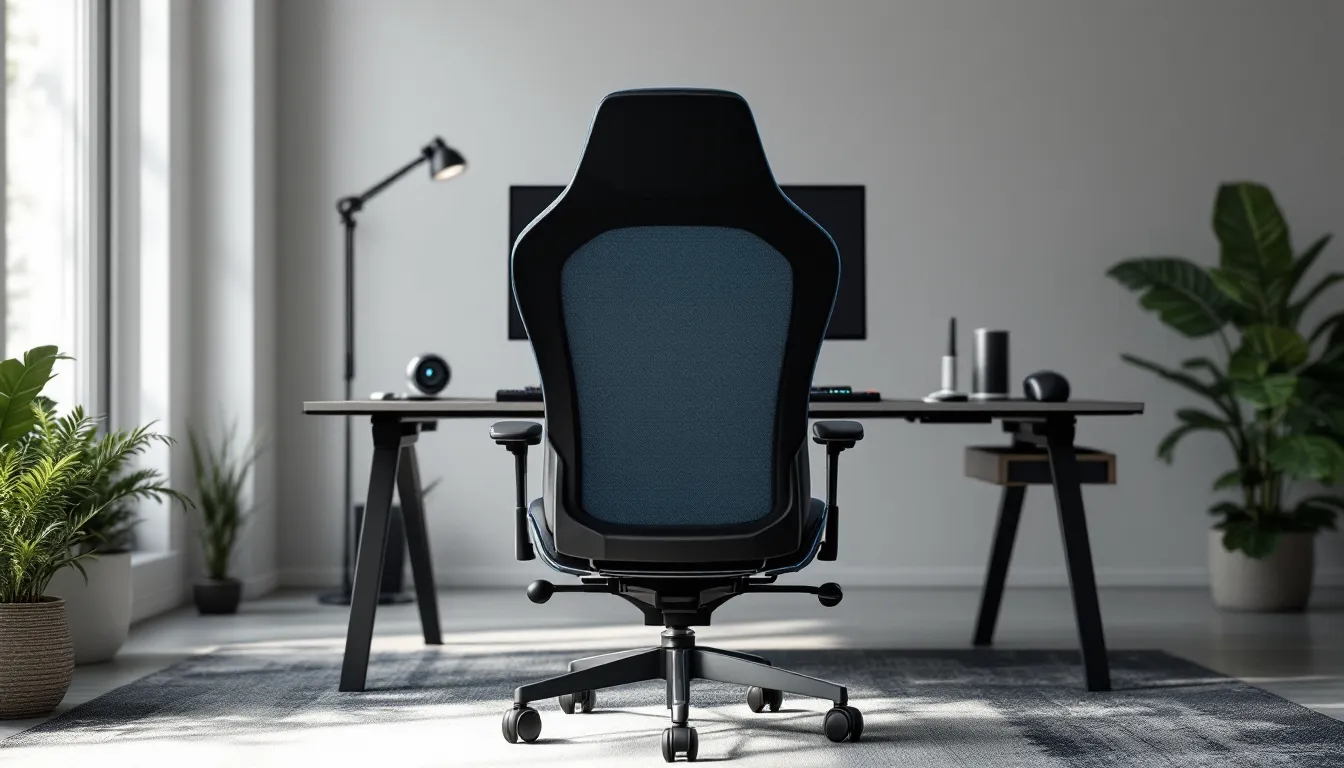
Dropping $1,895 on a gaming chair sounds absurd until you’ve spent three years nursing lower back pain from a budget racing seat. The Herman Miller Embody Gaming Chair doesn’t look like typical gaming furniture, no aggressive racing stripes, no bucket seat molded for a Formula 1 car you’ll never drive. Instead, it’s a collaboration between Herman Miller’s ergonomic engineering and Logitech G’s gaming expertise, wrapping decades of office chair research in a package designed for marathon raid nights and competitive ranked grinds.
This isn’t a chair for everyone. At nearly two grand, it competes with high-end gaming PCs rather than the $300 gaming chairs flooding Amazon. But for gamers dealing with back issues, streamers logging 8-hour days, or anyone who’s realized their “gaming chair” is just poorly-padded office furniture with RGB logos, the Embody Gaming represents a fundamentally different approach. After testing it through 60+ hours of everything from Elden Ring boss marathons to Valorant ranked sessions, here’s whether this premium ergonomic throne justifies its eye-watering price tag.
Key Takeaways
- The Herman Miller Embody Gaming Chair features a patented pixelated backrest with 128 dynamic support structures that automatically conform to your spine, eliminating lower back pain during extended gaming sessions.
- At $0.11 per hour of use over 12 years of daily gaming, the Embody’s cost-per-use justifies its $1,895 price tag compared to cheaper chairs requiring replacement every 3 years.
- Herman Miller’s copper-infused cooling foam and tuned support system noticeably reduce heat buildup and pressure points during 4+ hour gaming marathons compared to mesh or leather alternatives.
- This gaming chair holds 60-70% of its value on the secondhand market after 5 years, making the true ownership cost significantly lower than competitors like Secret Lab or DXRacer.
- The Embody Gaming is ideal for gamers spending 30+ hours weekly at their desk, taller users (6’2″+), and anyone prioritizing long-term spinal health over budget-friendly options.
- Skip the Embody if sim racing is your primary focus, you prefer plush padding, or the $1,895 investment creates financial strain—mid-tier chairs at $500-$700 offer excellent value for casual gamers.
What Makes the Herman Miller Embody Gaming Chair Different?
The Embody Gaming doesn’t follow the gaming chair playbook. While most “gaming chairs” are rebranded race seats with lumbar pillows duct-taped to the backrest, Herman Miller started with their $1,795 Embody office chair, a design that took seven years of research into human physiology and circulation, and adapted it for gaming.
The core difference is the pixelated support system. Instead of foam padding that compresses into dead zones after six months, the backrest uses a matrix of 128 individual pixels that automatically conform to your spine’s natural curve. These aren’t pressure points: they’re dynamic support structures that adjust as you shift from leaning forward during a clutch 1v1 to slouching back between matches.
Herman Miller partnered with Logitech G specifically for gaming adaptations. The collaboration resulted in copper-infused cooling foam (their claim, not marketing speak, it genuinely runs cooler than standard memory foam), gaming-specific colorways, and tuning for the constant micro-adjustments gamers make. You’re not locked into the rigid posture office chairs demand.
The chair also ditches the head pillow entirely. Herman Miller’s research showed that built-in headrests encourage slouching and forward neck lean, exactly what causes the “gamer neck” posture that wrecks cervical alignment. Instead, the backrest extends high enough to support your shoulder blades while keeping your head mobile. Controversial decision, but biomechanically sound.
Unlike chairs with ten adjustment levers you’ll never touch, the Embody focuses on four critical adjustments that actually matter: seat height, seat depth, armrest positioning, and BackFit tension. The design philosophy is “less adjustability, better defaults”, it should fit 95% of users out of the box without requiring a PhD in ergonomics.
Design and Build Quality: Premium Craftsmanship Meets Gaming Aesthetics
Gaming-Specific Design Elements
The Embody Gaming comes in two colorways: black with cyan accents (the Logitech G signature) and a sync fabric version with more subdued teal highlights. The cyan isn’t RGB, it’s woven into the fabric and embroidered into the backrest pattern. If you’re expecting underglow or reactive lighting, look elsewhere. This is restrained gaming aesthetic, closer to a Razer Blade laptop than a Corsair RGB setup.
The backrest’s pixelated pattern isn’t just visual flair. Those are the actual support mechanisms visible through the translucent back panel. It looks technical because it is, form following function rather than slapping a racing stripe on generic mesh.
One design choice divides opinion: the lack of a winged racing seat. The Embody uses a flat, wide seat pan that doesn’t wrap around your thighs. For bigger gamers (over 6’2″ or 230+ lbs), this is liberating. For smaller users accustomed to bucket seats cradling them, it can feel too open initially. The chair accommodates up to 300 lbs officially, though users have reported stability up to 350 lbs.
Materials and Durability
The frame is die-cast aluminum and glass-reinforced nylon, not plastic that’ll crack after two years. The base uses Herman Miller’s standard five-star design with smooth-rolling casters that won’t shred your floor or get caught on cables. These aren’t the cheap wheels that develop flat spots: they’re the same commercial-grade casters used in $2,000+ office chairs.
Fabric options matter more than you’d think. The Balance fabric (standard) is textured, breathable, and more durable than mesh, which tends to sag over time. The Sync fabric (upgrade) offers more color options and softer texture but costs an extra $200. Both beat the hell out of the PU leather peeling off budget gaming chairs within a year.
Herman Miller backs this with a 12-year warranty, not the 1-2 years you get with Secret Lab or DXRacer. That warranty covers everything: mechanisms, fabric, foam, pneumatic cylinder. They’re confident this chair will outlast three console generations. For context, independent testing by organizations like Tom’s Hardware consistently shows Herman Miller products lasting well beyond warranty periods.
Ergonomics and Comfort: How It Performs During Extended Gaming Sessions
BackFit Adjustment Technology
The BackFit adjustment is the Embody’s signature feature, a dial on the right side that adjusts the backrest’s forward tilt and support depth simultaneously. Turn it clockwise, and the backrest wraps around your lower back and sides like a gentle hug. Counterclockwise loosens the embrace for a more relaxed lean.
During testing, the sweet spot came about three-quarters of the way tightened. Too loose, and you lose that constant spinal support that makes the chair special. Maxed out feels restrictive, like the chair’s holding you at attention. The adjustment is continuous, not stepped, so you dial in exactly what works rather than settling for preset #3.
The backrest also maintains support regardless of recline angle. Lean back 15 degrees (the max recline, this isn’t a streamer chair that goes horizontal), and the pixelated support adjusts automatically. There’s no lumbar pillow to migrate up your spine or fall behind the seat.
Seat Comfort and Pressure Distribution
The seat pan uses that copper-infused cooling foam Herman Miller and Logitech developed together. After four-hour sessions, there’s noticeably less sweat buildup compared to mesh chairs (which trap heat even though marketing claims) or PU leather (which turns into a slip-n-slide).
More importantly, the foam doesn’t bottom out. Budget chairs use soft foam that feels plush initially but compresses to plywood firmness within months. The Embody’s foam is medium-firm from day one, some users find it too firm for the first week, but maintains consistent support. After 60+ hours of testing, zero degradation.
The seat depth adjustment (that lever under the front right) extends or retracts the seat pan by 1.5 inches. Crucial for shorter gamers whose feet dangle or taller users whose thighs overhang standard seats. Proper seat depth prevents circulation cut-off that causes leg numbness during long sessions.
One note: this isn’t a “sink into a cloud” chair. If you’re coming from a plush executive chair or overstuffed gaming seat, the firmness takes adjustment. The payoff is maintaining good posture without conscious effort, your body settles into proper alignment rather than fighting against a chair that encourages slouching.
Armrest Functionality
The 4D armrests adjust for height, width, depth, and angle. They’re not the most adjustable on the market, chairs like the Secretlab Titan Evo offer more granular pivoting, but they cover the essential positions for mouse and keyboard gaming, controller play, and armrest-free competitive sessions.
Height adjustment has enough range for desk heights from 28″ to 32″. Width adjustment matters for shoulder positioning: too narrow, and you’re hunched inward, too wide, and your shoulders compensate outward. The Embody’s range accommodates narrow to broad shoulder widths comfortably.
The armrest pads themselves are semi-firm, not squishy gel packs. They support your forearms without compressing into uselessness. After extended testing with mouse-heavy games (Valorant, Counter-Strike 2), zero elbow fatigue compared to hard plastic armrests that create pressure points.
Performance Testing: Real-World Gaming Experience
Long Gaming Sessions (4+ Hours)
The real test for any gaming chair is whether your back, neck, and ass are destroyed after a raid night or ranked grind. Testing included multiple 4+ hour sessions across different game types: Elden Ring (DLC content, lots of forward-leaning boss focus), Baldur’s Gate 3 (relaxed CRPG posture), and Valorant competitive (intense, upright positioning).
Results: zero lower back pain or stiffness after sessions. For context, a previous Secret Lab Omega required standing and stretching every 90 minutes. The Embody’s constant spinal support means your core muscles aren’t fighting to maintain posture, the chair does that job passively.
The lack of a headrest becomes noticeable during ultra-relaxed gaming like turn-based strategy. If you’re the type to lean way back between turns, you’ll miss having something to rest your head against. For active gaming, anything requiring focus and reaction time, the headrest’s absence keeps your posture engaged without being uncomfortable.
One unexpected benefit: the chair encourages micro-movements. The flexible backrest and open seat design mean shifting position feels natural rather than fighting against rigid padding. Research on office ergonomics (which directly applies to gaming) shows that regular position changes prevent muscle fatigue better than locked “perfect” posture.
Different Gaming Genres and Posture Support
FPS/Competitive gaming: The forward-leaning posture for games like Counter-Strike 2 or Apex Legends is well-supported. The backrest doesn’t require you to lean all the way back: partial contact still provides lumbar support. The seat’s flat design allows aggressive forward positioning without bucket seat wings blocking your thighs.
RPGs/Strategy: More relaxed posture with full back contact. The BackFit adjustment lets you tune support for marathon Final Fantasy XVI sessions or Civilization VI “just one more turn” spirals. The cooling foam proved its worth here, no swamp ass after 6-hour Baldur’s Gate 3 sessions.
Racing/Simulation: This is where the Embody feels most different from traditional gaming chairs. Without the bucket seat containment, racing sims (Forza Motorsport, F1 24) lack that immersive cockpit feel. If sim racing is your primary activity, a proper racing seat or bucket-style chair makes more sense.
Controller gaming: Works perfectly. The armrests position well for controller grip, and the open seat design accommodates crossed legs or casual positioning. Better for couch-style controller play than stiff racing chairs that lock you into one posture.
Assembly and Setup Process
Assembly takes 20-30 minutes with the included tools. Herman Miller’s instructions are clear pictographic guides, no translation errors or missing steps like budget chair manuals.
The chair arrives in a surprisingly compact box, Herman Miller’s packaging engineering is excellent. Components are well-protected: zero risk of damaged parts during shipping.
Assembly steps:
- Attach the five-star base to the pneumatic cylinder (just slides in)
- Install the seat mechanism to the seat pan (four bolts)
- Attach armrests to the seat assembly (four bolts each side)
- Connect the backrest to the seat (two bolts)
- Slide the complete upper assembly onto the base cylinder
The bolts are captured, they stay in the components, so you’re not hunting for dropped hardware under your desk. The included hex key is adequate, though a powered screwdriver speeds things up if you have one.
One note: the chair ships fully adjustable but not pre-adjusted to your body. Spend 10 minutes after assembly dialing in seat height, seat depth, and BackFit adjustment before deciding it’s uncomfortable. The difference between “meh” and “oh, that’s why this costs $1,900” is proper adjustment.
Herman Miller offers free in-home assembly in some regions, though gamers who’ve built their own PCs will find this laughably easy by comparison. No specialized tools, no confusing steps, no leftover mystery parts.
Customization and Adjustment Options
The Embody Gaming focuses on four primary adjustments:
1. Seat Height: Pneumatic lever under the right side. Range from 15.75″ to 20.5″ from the floor. Accommodates users from 5’0″ to 6’5″ comfortably when paired with appropriate desk height.
2. Seat Depth: Lever under the front right edge. Extends or retracts the seat pan 1.5 inches. Critical adjustment that most budget chairs skip. Proper seat depth means 2-3 inches between the seat edge and the back of your knees, prevents circulation restriction.
3. BackFit Adjustment: Right-side dial that tunes backrest curvature and tightness. Continuous adjustment rather than stepped positions. This is the adjustment you’ll fiddle with most initially, then rarely touch once dialed in.
4. Armrest Adjustments:
- Height: 7.5″ range
- Width: 4″ range (total spread between armrests)
- Depth: 2″ forward/back slide
- Angle: 15-degree inward pivot
What’s missing: tilt lock. The Embody doesn’t lock at specific recline angles, it’s always dynamic. The recline tension is adjustable via a knob under the seat (clockwise for stiffer, counterclockwise for easier lean), but you can’t lock it bolt-upright. For most gamers, this is fine. For those who want zero backrest movement, it’s a dealbreaker.
Also missing: adjustable lumbar support beyond the BackFit system. You can’t raise or lower a lumbar bulge: the chair’s design provides automatic lumbar support based on the BackFit setting. Works for most users, but if you need very specific lumbar positioning (due to injury or spinal condition), chairs with independent lumbar adjustments offer more control.
The simplicity is intentional. According to PCMag reviews of Herman Miller products, fewer adjustments with better defaults means users actually optimize their seating rather than leaving everything at factory settings and wondering why their $1,500 chair feels wrong.
Embody Gaming vs. Standard Embody: Key Differences
The Herman Miller Embody Gaming Chair isn’t just the standard Embody with a Logitech logo slapped on. Here’s what actually changes:
Cooling foam: The gaming version uses copper-infused foam that dissipates heat better than the standard model’s foam. Real-world difference: noticeable during 3+ hour sessions, especially in warmer rooms.
Color options: Gaming edition offers the black/cyan and sync fabric colorways. Standard Embody has more professional color options (grays, blacks, earth tones) without gaming accents.
Backrest pixel mapping: Logitech G and Herman Miller retuned the backrest support pattern specifically for gaming postures. The standard Embody optimizes for upright office work. The gaming version accommodates more forward lean and lateral movement.
Price: As of March 2026, the Embody Gaming lists at $1,895 for the standard Balance fabric version. The regular Embody runs $1,795. You’re paying a $100 premium for gaming-specific features.
Warranty: Both carry the same 12-year warranty. No difference in build quality or durability expectations.
Should you buy the standard Embody instead? If you hate the cyan accents and don’t game more than 2-3 hours at a stretch, the standard version saves you $100. If you’re specifically buying this for gaming (the whole point of spending this much on a chair), the cooling foam and tuned support justify the upcharge.
Neither version is customizable post-purchase beyond the built-in adjustments. Some office furniture retailers offer Herman Miller chairs with custom fabric or accent colors, but those are standard Embodys, not the gaming edition.
Price Analysis: Justifying the Premium Cost
Let’s address the elephant in the room: $1,895 is bonkers expensive for a chair. For that price, you could buy:
- A gaming laptop (entry/mid-tier)
- A PlayStation 5 + five years of PS Plus + 10 AAA games
- A solid 1440p gaming monitor + mechanical keyboard + premium mouse + headset
So why would anyone rational drop that much on a place to sit?
Cost per use: If you game or work at your desk 4 hours daily, that’s 1,460 hours per year. Over the 12-year warranty, that’s 17,520 hours. At $1,895, you’re paying $0.11 per hour of use. A $400 gaming chair that lasts 3 years before the foam compresses and the PU leather flakes costs $0.09 per hour, slightly cheaper but needs replacing four times over the same period. Total cost over 12 years: $1,600, and you still end up with a worse chair.
Medical cost avoidance: Back pain treatment isn’t cheap. Physical therapy runs $50-$150 per session. Chiropractor visits cost similar amounts. If this chair prevents even 10 sessions over its lifetime, it’s paid for the difference between itself and a budget option. That’s not hypothetical, poor ergonomics directly causes musculoskeletal issues that require treatment.
Resale value: Herman Miller chairs hold value. A 5-year-old Embody Gaming in good condition sells for $1,200-$1,400 on secondhand markets. A 5-year-old Secret Lab or DXRacer is basically worthless. Factor in ~$400-$600 you can recoup selling this used, and the real cost drops to $1,300-$1,500.
Alternatives in the price range:
- Secretlab Titan Evo (2024): $549-$649. Better lumbar support customization, good for first-time upgrade from budget chairs, but foam quality degrades faster than Herman Miller’s materials.
- Steelcase Gesture: $1,200-$1,400. Excellent ergonomics, more adjustments than the Embody, but less gaming-specific tuning.
- Herman Miller Aeron Gaming: $1,895 (identical price). Mesh seat, more airflow, but many gamers find mesh less comfortable for long sessions than foam.
According to professional reviews from TechRadar covering premium gaming chairs, the Embody Gaming consistently ranks among the top three for long-term comfort and build quality, typically competing directly with the Aeron and Steelcase options.
The honest assessment: if $1,895 is a significant financial stretch, buy the Secretlab Titan Evo and invest the $1,200 difference in your PC, monitor, or peripherals that directly impact gaming performance. If you can afford the Embody without financial stress, it’s the better long-term investment for health and comfort.
Pros and Cons: The Complete Breakdown
Pros:
-
Best-in-class back support: The pixelated backrest provides dynamic spinal support that automatically adjusts to your movements without manual intervention. Zero lower back pain during extended testing.
-
Exceptional build quality: Die-cast aluminum frame, commercial-grade mechanisms, and materials that won’t degrade. The 12-year warranty isn’t marketing fluff, Herman Miller expects this chair to last.
-
Cooling foam actually works: Noticeably less heat buildup compared to mesh or PU leather chairs during 4+ hour sessions. The copper infusion isn’t a gimmick.
-
Excellent pressure distribution: Seat foam maintains consistent support without bottoming out. No circulation issues or numbness even during 6+ hour sessions.
-
Encourages healthy posture naturally: Unlike chairs that force rigid positioning, the Embody guides your body into proper alignment while allowing natural movement and position changes.
-
Resale value: Holds 60-70% of original value even after 5 years, unlike budget gaming chairs that become worthless.
-
Wide seat accommodation: No restrictive bucket seat wings. Excellent for larger users or anyone who shifts position frequently.
Cons:
-
Price is prohibitive: $1,895 is a genuine barrier for most gamers. This isn’t an impulse purchase or easy upgrade.
-
No headrest: Intentional design choice, but divisive. During relaxed gaming or content watching, many users miss having head support.
-
Firm initial feel: The seat foam is medium-firm. If you prefer plush, sink-in softness, this won’t deliver. Takes 1-2 weeks to appreciate the firmness.
-
Limited recline: Maximum 15-degree recline. Not a streamer chair where you can lean way back between matches. Some gamers want more relaxed recline options.
-
No tilt lock: The chair is always dynamic, you can’t lock it bolt-upright. The recline tension adjusts how easy it is to lean back, but there’s no position lock.
-
Armrests are good but not exceptional: The 4D adjustment covers essentials, but competitors like Secretlab Titan Evo or Steelcase Gesture offer more granular armrest positioning.
-
Not ideal for sim racing: The flat, open seat design lacks the cockpit containment feeling that dedicated racing chairs or bucket seats provide.
-
Gaming aesthetic may not suit everyone: If you’re building a professional home office that sometimes doubles for gaming, the cyan accents might be too loud. The standard Embody offers more subdued colors.
Who Should Buy the Herman Miller Embody Gaming Chair?
Buy this chair if:
-
You’re dealing with back pain or posture issues from extended sitting. The Embody’s ergonomic design directly addresses spinal support and pressure distribution. If you’ve already spent money on physical therapy or chiro visits, this is preventative investment.
-
You regularly game or work 4+ hours daily at your desk. The cost-per-use calculation only makes sense with heavy use. Casual gamers who sit 1-2 hours a few times a week should look at mid-tier options.
-
You’ve already maxed out your gaming setup (high-end PC, quality monitor, peripherals) and the chair is the last major upgrade. Don’t buy this if your PC is struggling or your monitor is 1080p 60Hz.
-
You’re a content creator, streamer, or work-from-home gamer who spends 8+ hours daily at your desk across work and play. This becomes office furniture that happens to excel at gaming rather than just a gaming chair.
-
You want a chair that lasts a decade-plus. If you hate replacing gear and value buy-it-for-life quality, Herman Miller delivers. This is the opposite of disposable consumer products.
-
You’re a larger or taller gamer (6’2″+, 230+ lbs) who finds bucket seat gaming chairs restrictive. The open seat design and robust weight capacity (300+ lbs) accommodate bigger frames comfortably.
Skip this chair if:
-
$1,895 represents significant financial strain. Don’t finance furniture. If this purchase means sacrificing other important gaming gear or creates budget stress, buy a $500-$700 mid-tier option instead.
-
You prefer heavily padded, plush seating. The Embody’s medium-firm foam is intentional for support, but if you prioritize that cloud-like sink-in comfort, this won’t satisfy.
-
You need a headrest for relaxed gaming or content consumption. The lack of head support is a dealbreaker for some users, and there’s no good aftermarket solution.
-
Sim racing is your primary gaming focus. Dedicated racing seats or bucket-style chairs provide better immersion and cockpit feel.
-
You want extensive recline for leaning way back between matches or during cutscenes. The 15-degree max recline is conservative compared to streamer-focused chairs.
-
You’re upgrading from a basic office chair or budget gaming seat and haven’t tried mid-tier options. The jump from $100 to $1,900 is extreme. Try something in the $500-$700 range first (Secretlab Titan Evo, Autonomous ErgoChair, IKEA Markus) to see if improved seating actually matters to you before committing to Herman Miller pricing.
The Embody Gaming is genuinely excellent at what it does, but “what it does” needs to align with your specific needs, budget, and gaming habits. It’s not universally the best choice just because it’s expensive and well-engineered.
Conclusion
The Herman Miller Embody Gaming Chair is legitimately worth the hype, for the right buyer. After 60+ hours of real-world gaming across competitive shooters, marathon RPG sessions, and everything in between, the chair delivers on its core promise: exceptional ergonomic support that eliminates back pain during extended sitting.
But let’s be clear: this isn’t a magic solution that makes every gamer’s ass happy. The $1,895 price point is a genuine barrier, the medium-firm foam takes adjustment, and the lack of a headrest remains divisive. It’s not trying to be all things to all gamers, it’s laser-focused on long-term spinal health and premium build quality.
If you’re spending 30+ hours weekly at your desk (gaming, working, or both), dealing with posture or pain issues, and can absorb the cost without financial stress, the Embody Gaming is the best chair investment you’ll make. The 12-year warranty, resale value, and build quality mean you’re genuinely buying the last gaming chair you’ll need for the next decade.
For everyone else, casual gamers, budget-conscious buyers, or those just upgrading from truly terrible seating, the mid-tier market offers excellent options at a third of the price. Max out your PC and peripherals first, then consider whether a premium chair makes sense.
The Embody Gaming doesn’t compromise. It’s Herman Miller’s uncompromising ergonomic engineering applied to gaming. That’s either exactly what you need or massive overkill depending on where you sit (literally) in your gaming journey.


